Andrew L. Urban
In the latest explosive Etter/Selby report tabled in the Tasmanian Parliament this week digging into the police investigation of the Sue Neill-Fraser conviction, the authors ask: Why did that failure to investigate and properly disclose information happen?
That is the question that has haunted the Sue Neill-Fraser case from the very beginning. And never answered. Conjecture, however, is rife. Should we assume it is severe police incompetence – and the desire to hide it? Or is it driven by some malice – and the desire to hide it? In time, the truth will out …
The authors state: “The evidence (including the results of several years of RTI (aka FOI) applications to reluctant police) demonstrates that the police had reason to suspect the involvement of others but chose not to properly investigate. In so far as they did make inquiries, it seems they failed to share that information with the prosecution and the court, a fundamental contravention of their duty.”
The President of the Sue-Neill Fraser Support Group, Rosie Crumpton-Crook, says in response to the report: “It beggars belief that for years, the Tasmanian Government has appeared to ignore irrefutable evidence that points to the fact that Sue Neill-Fraser has been wrongly convicted. Barbara Etter and Hugh Selby have worked tirelessly to once again present evidence that shows a properly independent inquiry is long overdue.
The Tasmanian Government cannot continue to obfuscate with regards to holding an inquiry.
I often find myself asking why is the government so reluctant to have this case independently assessed? Why have they failed to ensure that potential lines of inquiry, which have emerged over sixteen years, are properly investigated? Why have they failed to ensure that there is disclosure of crucial evidence? Is this a case of poor practice or something more sinister? If the Tasmanian authorities are so confident in the conviction surely they should welcome an inquiry.
The recent amendment to Sue’s parole order effectively gags Sue, and remember, there is no Tasmanian legislation that prevents parolees from speaking to the media, the amendment is all encompassing, it appears to prevent Sue from speaking to anyone other than her lawyer about her alleged innocence / wrongful conviction. When you add this to the fact that Barbara Etter and Hugh Selby have uncovered evidence, which was not disclosed to Sue’s legal team, then it makes me think that the Tasmanian authorities have something to hide. I am sure I am not alone with those thoughts.
I did not meet Sue until after she was released from prison, and I have come to know her very well over the past three years. She is undoubtedly the bravest person I know, her stoicism is humbling. She is the victim of what appears to be an egregious miscarriage of justice and it is time someone in the Tasmanian Government had the courage to lift the gagging order and ensure that a Commission of Inquiry is established.”
But of course, the appeal court should have overturned the conviction on the basis of the manifestly false and misleading evidence put to the jury at trial. Flinders University legal academic Dr Bob Moles reminds that “The forensic science evidence was clearly false and nonsensical – the prosecutorial submissions were monstrous.” He goes on to reaffirm what he has previously stated, that there is “clear and unimpeachable evidence contained in the transcript of the trial…”
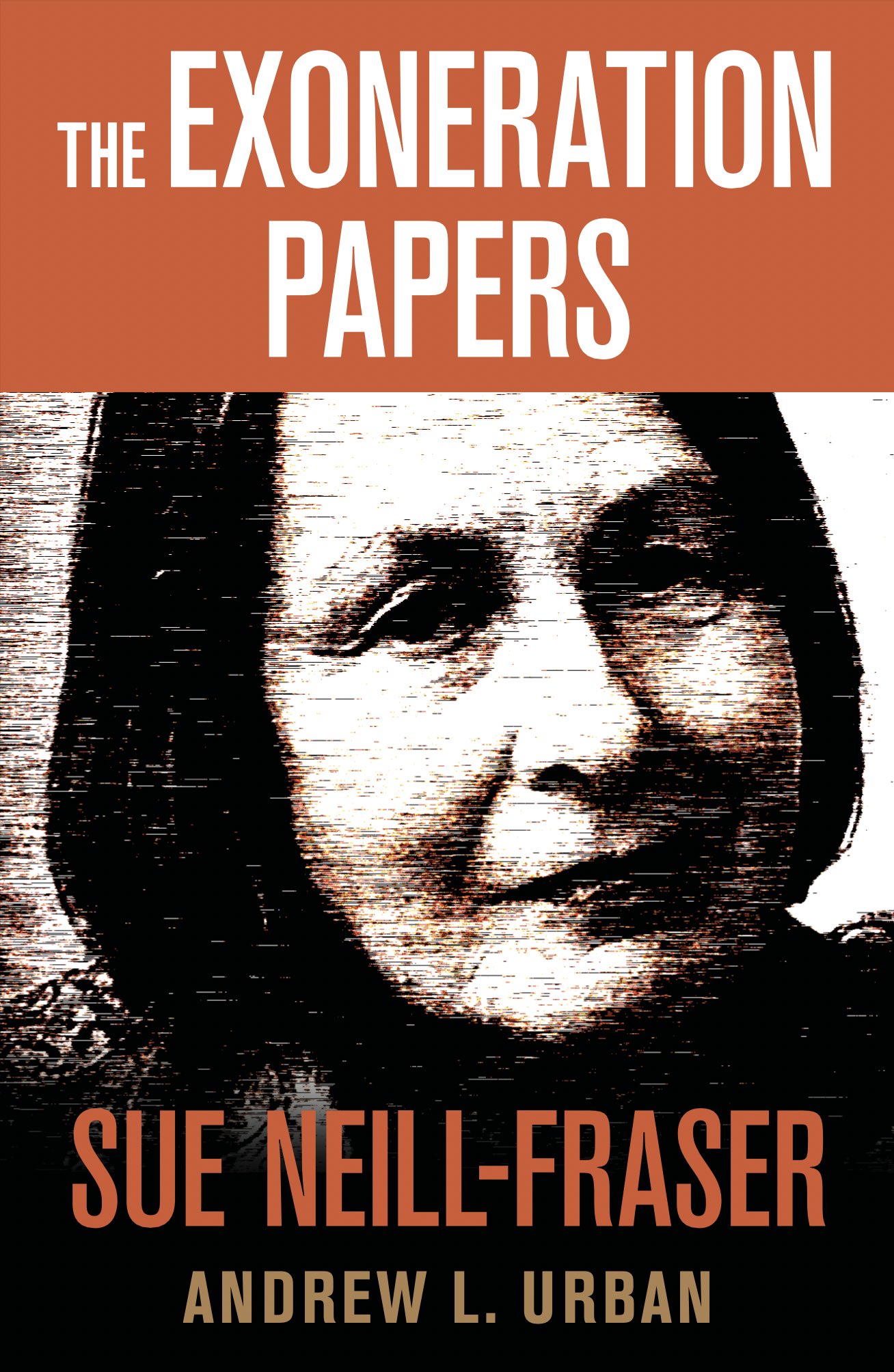 And in the book by this writer.
As has always been the case, only Tasmanian public opinion can open this can of worms and this report is a potential can opener, given the public is swayed by perception as much as legal argument. The Mercury’s editorial no doubt helps: “A mixture of new science and uncovered evidence could once again shake the foundations of one of Tasmania’s most divisive criminal cases and many would argue it deserves the full weight of independent scrutiny.
“If credible scientific or evidentiary developments cast real doubt on a conviction, those developments must be examined – no matter how much time has passed or how uncomfortable the process may be.
“Tasmania’s justice system prides itself on fairness and transparency. Both will be tested by how authorities respond to this latest evidence.”
I would argue that based on its track record, Tasmania’s justice system has no right to pride itself on anything in regard to its abominable actions in this case. Shame is the appropriate feeling …
I uploaded the trial transcript into ChatGPT. I gave it the following instruction:
“Read through the two Etter & Selby reports, and through the Trial Transcript, to explain how the evidence related to Peter Lorraine was dealt with in the court”
I provide a link to ChatGPT lengthy response :
https://chatgpt.com/s/t_6ab796ad8e6c81918989e9ab110a885c
ChatGPT concluded as follows:
“The key point I would draw from all three sources
There is an important nuance in Etter & Selby’s description of what happened at trial.
It would be too simple to say that “Lorraine falsely identified the Four Winds dinghy and the jury was simply told to accept it.”
That isn’t quite what the transcript shows.
The jury actually heard substantial reasons for caution: Lorraine’s limited viewing conditions, uncertainty over distance, inability to identify the dinghy’s construction, absence of a visible outboard, his in-court “dark” description, Conroy’s evidence that Lorraine had earlier said “whitish cream to yellow,” Conroy’s initial doubt about whether Lorraine had the correct mooring, and Justice Blow’s explicit presentation of the possibility that another dinghy and another visitor were present.
Indeed, the defence itself urged the jury to accept the most important part of Lorraine’s evidence—that the man was almost certainly Bob Chappell—and used Lorraine’s dinghy evidence affirmatively to support the proposition that someone else was visiting the yacht.
The potentially important Etter & Selby point is therefore narrower and more interesting: would Gunson have adopted Lorraine so enthusiastically if he had possessed and appreciated the full 27 January Sinnitt material?
That is the question on which I think the 2021 report needs to be tested most carefully.
There is also an apparent factual issue worth investigating further: the trial already exposed Conroy’s 31 January omitted “whitish cream to yellow” description, whereas Etter & Selby’s later case places special importance on Sinnitt’s separate 27 January contemporaneous notes. Those two records should not be conflated. The 2025 report itself specifically identifies the 27 January handwritten notes as the later-disclosed material. “
Attached is AI’s comment on Hugh Selby’s 8 points:
1. The reason for calling the decent Mr Lorraine was to establish that the Four Winds dinghy, a blue and white quick silver with an outboard, was at the yacht because that placed Ms Neill Fraser there
2. The statement that Mr Lorraine signed did that.
3. His earlier phone chat showed beyond doubt that he was looking at a different yacht and a different dinghy/tender.
4. The differences between the phone notes and the signed statement are not trivial. They are discussed in detail in the 2021 Etter/Selby papers tabled in the Legislative Council.
5. There was an inexcusable time gap between the ODPP team being given those phone chat notes and any disclosure to the defence. The result was that the jury was misled.
6. Those phone chat notes should have been disclosed before trial by the police to both sides.
7. Mr Ellis, who interviewed Mr Lorraine before the trial, failed to pick up the falsity in the signed statement.
8. If the phone chat notes had been disclosed at the right time, or Mr Ellis/his team had properly proofed Mr Lorraine about his recollection, then Mr Ellis would not have called Mr Lorraine and the jury would not have been misled.”
INSTRUCTION TO AI (ChatGPT)
Since you have read the Trial Transcript, what’s your opinion on Selby’s comments?
AI Response is at:
https://chatgpt.com/s/t_6ab83aa844dc8191b01c44284f9726f7
The timing of Hugh Selby’s request to delete the articles (and hence all the comments) is interesting, considering that only a week earlier Michael Gaffney had called off the debate about the Neill-Fraser case in the Legislative Council.
Perhaps there is a weakness in the two Etter & Selby reports that required further attention by Gaffney and Neill-Fraser’s supporters. But this does not explain why Selby would want the articles on your website deleted.
Since the wording of the articles is available on another blog (https://smithforensic.blogspot.com/2026/03/part-3-sue-neill-fraser.html) I noticed a passage that may cause some concern. Selby wrote:
“My response to Mr Ellis’s attack upon me and my views (in my article) is that his letter is to be welcomed. I look forward to his appearing before a Royal Commission where his letter to you will provide opportunities for a telling cross-examination of him. By the way, Ms Etter and I interviewed Mr Lorraine whose memory then was sharp and clear.”
Well, it looks to me as though Selby’s confidence that there would be a Royal Commission (or Commission of Inquiry) may have diminished following Michael Gaffney’s announcement on 24 March:
“Honourable Members we have only one opportunity in a term of government to move a motion for a Commission of Inquiry into the Neill-Fraser case, I do not wish to press the House to a decision at this time, before additional information can be sought and obtained.”
https://www.mikegaffney.com.au/sue-neill-fraser-1/24-march-2026
One thing that stands out is that Hugh Selby (in the article), and Etter & Selby in their report, made a significant issue of how the evidence from Peter Lorraine was dealt with. It seems likely that, following Mr Ellis’s response, Mr Gaffney decided that further inquiries needed to be made about this issue (and some other aspects of the case), perhaps with Tasmania Police and the current DPP, and that this may have contributed to the decision not to proceed with the Legislative Council debate that had been scheduled for 24 March.
My own opinion is that it all comes down to who has the most thorough and reliable interpretation of what occurred.
For example, Ellis’s article offered a lot of contextual information that Selby ignored. It is interesting that Selby said that he and Etter interviewed Mr Lorraine and that his “memory then was sharp and clear.” I find that assessment a little naive, considering that the interview occurred a number of years after Mr Lorraine’s testimony in court. I saw Mr Lorraine being interviewed by Charles Wooley on 60 Minutes in 2014, and Mr Lorraine did not appear to me to be particularly confident in his recollection.
I don’t know where to post this but is related:
I was reading Justice System for Refom in Tasmania Facebook about Selby’s and Ellis’ articles that were on Wrongful convictions Report.
Those articles are no longer available. What is the reason for deleting them?
I made some inquiries. It looks like that you removed the articles around 30th March
Removed at the request of Hugh Selby.