
Andrew L. Urban.
In the news: in America, after 30 years in solitary, Christa Pike’s execution went horribly wrong when two lethal injections left her unconscious but alive. Nadil Hasan will face a military firing squad set for December 3. Now that Donald Trump has expressed reservations, it may or may not be live streamed – if that’s the right term. Both were convicted of horrible murders, the latter of 13 US servicemen. But is the death penalty just murder by the State*?
There are many critics of both of these cases; the cruelty of botched execution attempts, the barbarity of live-streaming an execution most pertinent. Other criticisms of the death penalty include the risk of executing innocents (there have indeed been some).
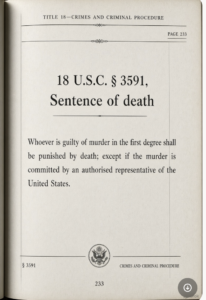
Whoever is guilty of murder in the first degree shall be punished by death; except if the punishment is committed by an authorised representative of the United States.
Contrary to popular assumption, capital cases are typically far more expensive than sentences of life without parole. The extra costs come from longer trials, specialized legal teams, extensive appeals, and heightened security requirements. Many defendants ultimately serve life sentences anyway after years of costly litigation.
“To take a life when a life has been lost is revenge, not justice.” – Desmond Tutu
Opponents argue that the death penalty itself violates the right to life and constitutes cruel or degrading punishment. This includes the psychological torment of long stays on death row (“death row phenomenon”) and the reality of botched executions (especially with lethal injection). International human rights bodies and many democracies treat it as incompatible with modern standards of human dignity.
Critics also argue that retribution does not restore the victim and that the practice diminishes society’s moral standing. Quite. Defenders of the death penalty point to the worst crimes, vicious murders, terrorism and so on, to justify it.
The one challenge to the death penalty to which I subscribe is the one formulated by the late Desmond Tutu, South African churchman, politician, archbishop, Nobel Prize winner (1931–2021): “To take a life when a life has been lost is revenge, not justice.” If we make an exception for murder by the apparatus of the State, it is impossible to make a moral, rational case that murder is evil and wrong.
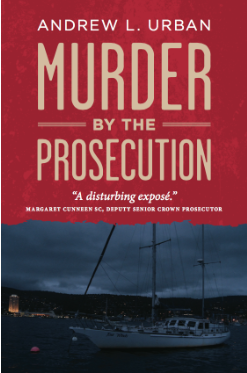 *Andrew L. Urban is the author of Murder by the Prosecution (Wilkinson Publishing), exposing several wrongful convictions.