
Why is Lindsay Clancy the only person facing criminal prosecution for the heartbreaking tragedy of her children’s deaths? Institutional cover up? Here’s what all those outraged by Lindsay Clancy as a monster mother need to know, before passing judgement on her and attacking those who entertain reasonable doubt about her criminality. Take 20 minutes to watch Neal K. Shah* explain how America’s psychiatric system failed her and her three little children. Or read the transcript below.
Why did the jury in the Lindsay Clancy trial want to see the bag full of pills she had been prescribed? It’s the key to why and how Clancy became a victim of the psychiatric system.
Why did the prosecution’s star witness resign from his hospital within hours of giving his smug testimony and why did his profile vanish from the hospital directory?
* Neal K. Shah is an American researcher and healthcare innovator best known as the co-founder and chief executive officer of CareYaya Health Technologies, and co-founder and chairman of Counterforce Health. His work focuses on advancing health equity for aging populations and developing technology-based tools that assist patients and caregivers.
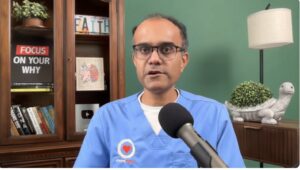
Neal K. Shah
THE SHAH TRANSCRIPT
(recorded just prior to the end of the inconclusive jury deliberations)
Breaking news, the jury is unable to reach a decision in the Lindsay Clancy trial after four days of deliberation and over 20 hours. They’re deadlocked and the judge just sent them back for more time, but this could end up being a hung jury or declared a mistrial. But I’m going to explain a couple of really interesting things that the media has totally missed and connect the dots for you on why. Only hours after walking off the witness stand, the prosecution’s star psychiatric expert, Dr. Avram Mack, abruptly resigned from his position at Nemours Children’s Hospital. Rumours circulated that he was fired or pushed out after his disastrous appearance in court.
And while that shocking resignation was unfolding, 12 jurors locked inside a Massachusetts deliberation room made an urgent and extraordinary request. They didn’t just ask the judge if they could review legal transcripts, but they demanded to see the physical bags of prescription pill bottles.
So I’m going to connect the dots here for you and make a prediction. It’s now clear to me that America’s entire psychiatric care system is really on trial here, and it should be. And I’m going to predict what that means for the outcome, and I’m going to make a bold claim that the doctors who failed to properly help Lindsay and thereby failed to save the lives of three little children may end up facing much more consequences in the weeks and months ahead. In this video, we’re breaking down three critical truths that the medical establishment does not want you to talk about.
First, the real reason that Dr. Mack’s totally smug courtroom testimony just completely crumbled under cross-examination. Second, the 13 drug chemical roulette that turned a loving nurse and mother into a hollowed out shell of herself. And third, the urgent legal case for why the doctors who prescribed that deadly cocktail to Lindsay and later turned her away even when she pleaded to be admitted to a psychiatric hospital should belong in a courtroom having to defend themselves from accusations of negligence.
a barrage of toxic prescriptions
I’m Neal K. Shaw. As a Johns Hopkins and NIH funded caregiving researcher and a family caregiver myself and the CEO of CareYaya, I spend every single day working with families, older adults, and caregivers who are trying their best to navigate the deep cracks of our broken healthcare system. I see firsthand how modern healthcare routinely ignores human suffering, dismisses family instincts, and often replaces real care with a barrage of toxic prescriptions.
This video reflects my personal opinions and I have some really strong ones about this situation. If you believe that it’s time to hold our healthcare institutions accountable before another family is destroyed by tragedy, please take a second right now to hit the like button and please share this video with a friend or family member. The only way we can drive change in this system is by exposing the truth. To me, it’s clear that the jury isn’t just deciding whether Lindsay understood right from wrong when three innocent children lost their lives.
By asking to see those pill bottles and deliberations and by the abrupt resignation of the star witness from his hospital job for the prosecution, I think most people across America are looking directly at the chemical fingerprints left by our modern psychiatric care system that has completely lost its way. Dr. Mack’s exit from this hospital job shortly after his testimony I think further proves a point. People are rapidly realizing how broken our psychiatric care system is. So let’s start with what just happened in that courtroom a few days ago. When Dr. Avram Mack took the stand for the prosecution, he brought with him the entire weight of elite American medicine, Ivy League credentials, hospital directorships, decades in academic behavioural health. He sat before that jury with the classic dismissive white coat authority that millions of Americans recognize and distrust about modern healthcare. He was even smiling and smirking during the testimony.
astonishing statements
Think about that. In a trial that involved the tragic deaths of three little children. What kind of psychiatrist is that? Dr. Mack told the court with clinical detachment that Lindsay had a major depressive episode but was not in a state of psychosis. He even claimed that she retained the capacity to plan, make choices and to understand the wrongfulness of her actions. But then came the cross-examination.
Defence attorney Kevin Reddington began pressing Mack on the biological realities of perinatal mental health. And under oath, the state’s foremost psychiatric witness dropped a statement so astonishing that it left healthcare experts across the country just gasping. Mack testified that he didn’t even factor postpartum conditions into his evaluation and he then went on to claim that the postpartum period only lasts four weeks after birth. Four weeks. Now I’m not a postpartum expert, but any perinatal specialist, any midwife, even any mother who has given birth knows that hormonal fluctuations, neurological adaptations and postpartum mood disorders can sometimes reach for months or even an entire year or more after delivery.
Yet here was the prosecution’s star witness and supposedly an expert in psychiatry brought in to send a woman to prison for life without parole, operating on an archaic dismissive definition that just totally ignores the biological context of the crisis. Who let this guy become the chief of psychiatry at a children’s hospital? No wonder he had to resign after his disastrous performance in court. At one point, he was even so evasive with his answers that the judge literally had to step in and admonish him on the stand. Judge Sullivan said directly to him, “Here’s the way this works. You don’t really ask a lot of questions, you answer the questions.”
Within hours of that disastrous performance, Nemours Children’s Hospital in Delaware confirmed that Dr. Avrim Mack was no longer employed by their institution. His profile was just wiped from their directory. Now, the hospital has kept its official reasoning confidential, oftentimes as big organizations do, but let’s not be naive here.
psychiatric mismanagement
I think when an institutional leader steps into a national spotlight like that, demonstrates breathtaking ignorance and arrogance and lack of understanding of perinatal neurobiology and displays open dismissiveness towards the legal process and is rebuked by the judge, I think the institution moves swiftly to protect its hospital’s brand. I don’t think his testimony wasn’t science, but it seemed more like a forensic justification designed to secure a conviction by totally minimizing the massive and catastrophic role of psychiatric mismanagement in this case. And that brings us to the first major question I have. If the prosecution’s leading psychiatric expert was this disconnected from clinical reality, what was actually happening to Lindsay Clancy’s brain in the months leading up to January 2023? To understand why Lindsay mentally broke down, I think you can’t just look at her as a cold and calculating murderer in a vacuum. You have to think about what she was on, and it’s really surprising.
a reckless chemical firing squad
During closing arguments, defence attorney Kevin Reddington held up a bag of empty pill bottles retrieved from Lindsay’s bedroom. And after the jury went into deliberations, they asked to bring those physical bottles back into the room with them. Why? Because I think those bottles tell a story that indicts modern psychiatry. Between late summer 2022 and January 2023, Lindsay was prescribed over a dozen very powerful mind-altering psychiatric drugs. Zoloft, Prozac, Lexapro, Klonopin, Ativan, Valium, Ambien, Trazodone, Hydroxyzine, Amitriptyline, Seroquel, Buspar, Lamictal.
Some of these you may have heard of, some of you probably haven’t even, but in less than 120 days, outpatient psychiatric provider subjected this postpartum mother to a reckless chemical firing squad. And here’s how modern corporate psychiatry works when you walk into an outpatient clinic today. You often only get a 15-minute appointment. In Lindsay’s case, sometimes the provider doesn’t even see you and sits behind a computer screen on a Zoom call, doesn’t even get to know you in person.
You tell them that you’re feeling sad, so they just quickly prescribe an SSRI like Zoloft. Two weeks later, the SSRI causes agitation and insomnia. Instead of recognizing that the body’s rejecting the drug, the provider then adds another drug like a benzodiazepine like Klonopin or a sedative like Ambien to suppress the side effects of the other drug. Then the benzodiazepine causes other problems like daytime grogginess or panic. So what do they do? They then prescribe another atypical antipsychotic like Seroquel or an anti-convulsant mood stabilizer. Then they rapidly taper off one drug, start another at high dose, cross-titrate, switch mechanisms, and basically stack the central nervous system with depressants on top of stimulants. This does not sound like personalized healthcare or medicine, but more like pharmaceutical Russian roulette. When you rapidly start, stop, and combine multiple neuroactive drugs, you do not stabilize someone’s brain. You may actually induce a terrifying clinical phenomenon called akathisia or even other severe side effects.
This akathisia is not just feeling restless. It’s a profound and deeply troubling neurological state where the nervous system is just set on fire. Many people describe it as feeling like their soul is trying to jump out of their skin, creates intense emotional blunting, impulsive violence, sudden severe suicidality. Lindsay even knew real time her brain was breaking down. We know this because she documented it in real time. In a note found on her phone, she wrote six words that should haunt every prescribing doctor that saw her. ‘Medication stole my motherhood and my life.’
screaming for help
She wasn’t even hiding her distress. She was actively screaming for help from the very people that were supposedly licensed and supposed to help her and save her. Now ask yourself this question, and I think this is the crux of the psychiatric system’s failure. When Lindsay realized that the outpatient drugs were destroying her, where did she go and what did the psychiatric care system do in response? When someone in America experiences severe chest pain and a cardiac crisis, we don’t hand them 10 different pills in our urgent care and just tell them to figure out at home. We rush them to the ER and admit them into the hospital. We put them on continuous telemetry. We monitor their vital signs second by second or even rush them into surgery because that’s how we treat heart attacks. Here, Lindsay was an experienced labour and delivery nurse at Massachusetts General Hospital, one of the best hospitals in the country.
She knew what medical care was supposed to look like, and when she felt her own mental state totally disintegrating under this avalanche of medications, she didn’t isolate herself. She checked herself into McLean Hospital, one of the premier psychiatric facilities in the country, over New Year’s weekend. She literally walked up to the gates of modern psychiatric healthcare, surrendered herself and said, “I am in crisis. My brain is not working properly. Please help me.”
And what did the system do? They kept her for a few days, performed some routine evaluations, adjusted her prescription cocktail of meds, and concluded she didn’t express an explicit suicide plan or active intent for violence at that precise interval and discharged her back into the wild. They didn’t even realize she’d called a suicide hotline twice prior to her stay at the hospital, and they didn’t even communicate with her other psychiatric providers who had prescribed her all those drugs to ask about her condition and a rapidly changing cocktail of medications.
They sent an unstable, severely over-medicated, struggling mother back into a home with three little children with a shopping bag full of pill bottles. The day before this unfathomable tragedy occurred, Lindsay met with her main psychiatrist, Dr. Jennifer Tufts, and she sat there emotionally blunted, detached from reality, suffering from medication-induced numbness and said she was doing all right. That 15 minute Zoom call was deemed proper healthcare.
What is this? I think this is the fundamental rot at the core of outpatient behavioural healthcare. Modern psychiatry has replaced human observation, inpatient stabilization and family involvement and deep clinical listening with just an assembly line of pill pushing. Doctors often hide behind clinical notes that check legal compliance boxes. Patient denies suicide ideation. Check. Patient denies homicide ideation. Check. Okay, let’s continue the current drug regimen. I think it’s defensive medicine at its most cowardly. It’s designed to protect the hospital from malpractice lawsuits, but not to protect the human being that is deeply suffering while sitting in the chair in front of you or the family that is waiting at home.
Before we move onto why I think these doctors should face legal consequences, if this breakdown resonates with you, if you have ever watched a loved one get prescribed pill after pill with zero coordination, please hit the like button. It’ll hopefully tell the algorithm that this message needs to reach millions of people who feel completely gaslighted by our modern healthcare system.
Now, let’s ask the question that no mainstream media coverage is willing to ask openly. Why is Lindsay Clancy the only person facing criminal prosecution for this heartbreaking tragedy? Under American criminal law, if an engineer builds a bridge with gross negligence, ignores the standard load limits, uses substandard materials, and then the bridge collapses and kills people, that engineer is indicted for involuntary manslaughter. If a corporate manager orders his or her workers into an unventilated toxic trench and they die, that manager is charged with reckless endangerment and criminal negligence.
they all get to walk away clean
Yet in modern healthcare, a group of psychiatrists can prescribe a dangerous and destabilizing cocktail of over a dozen overlapping psychiatric medications to a postpartum mother who’s struggling, dismiss her repeated pleas for comprehensive inpatient admission, even turn her away from a hospital in December when she tried to admit herself. They can fail to properly monitor her for drug-induced psychosis and akathisia. And then when the absolute worst case scenario occurs with the heartbreaking deaths of three poor little innocent children, they all get to walk away clean. They don’t lose their medical licenses, they don’t face a grand jury, and they don’t ever even have to sit at the defence table to explain themselves. It’s my opinion that this was a major dereliction of duty by all the healthcare providers that had Lindsay Clancy under their care and it cost the three little children their lives.
What did our system do instead?
Well, the legal system treats these providers as a neutral third party witnesses. The state even hires other psychiatrists like Dr. Avermek, likely paying them hundreds of dollars an hour to take the witness stand and testify that the medical system did nothing wrong and that this tragedy was simply the result of cold-blooded criminal premeditation by a mother who’s struggling. I’m not a legal expert, but to me, I think that’s called an institutional coverup.
Look at the economic incentives that govern American healthcare today. First incentive, churn over care. An outpatient psychiatric practice doesn’t survive economically by spending 90 minutes truly getting to know you, truly helping the patient, providing deep psychotherapy or even doing a comprehensive metabolic panels on every patient to understand all the drugs in their system and how they interact with each other. They make their money usually by billing in 15 minute increments.
The faster they write a prescription and get you out the door, the higher their profits. Second incentive, inpatient bed starvation. Psychiatric hospitals have systematically cut inpatient bed counts for decades because inpatient beds require high nurse-to-patient staffing ratios and deliver lower profit margins than outpatient pharmacological clinics where they can just quickly see people, dispense pills and be done with it. Why was Lindsay Clancy discharged from McLean Hospital so quickly, and why was she denied admission at Women and Children’s Hospital when she tried to check herself in? Probably insurance pressure and bed turnover.
Third incentive, total immunity. Malpractice insurance and state statutory damage caps mean that even if a family sues a doctor for reckless prescribing, the insurance company usually ends up settling it out of court behind a confidential non-disclosure agreement. The public never hears about it. The medical board takes no disciplinary action. I think without negative consequences, that is without the real threat of criminal prosecution for dereliction of duty, why would modern psychiatry ever change its behaviour?
If a doctor knows that the worst consequence of reckless polypharmacy is an insurance payout handled by their malpractice insurance carrier, they will just continue pushing pills at high volume. But the moment that a prosecutor stands before a grand jury and indicts a negligent prescriber for reckless endangerment leading to the deaths of three little children, then the entire medical profession will sit up, pay attention, and immediately stop treating human brains like a chemistry experiment.
“Give us the pill bottles” a watershed moment
Three children here, Cora, Dawson and Callan are dead. A mother is paralysed from the waist down and destroyed for the rest of her life. The entire family is left in unimaginable grief and the system that wrote all these prescriptions, collected all the copays, denied her admission to the hospital the first time, and then sent her home the second time is completely left unaccountable and has washed their hands of this, which is why I think the fact that the jury requested those pill bottles is a watershed moment.
It shows that everyday American citizens are no longer blindly bowing down to the smug and arrogant authority of institutional medicine. The jury heard Dr. Mack’s smug theories. They watched him smirk on the stand in a trial about the deaths of three little children and then they went into deliberations and said, “Give us the physical evidence. Give us the pill bottles. We want to see what was done to this woman’s body and to her brain.” I think that is people’s common sense asserting itself against the institutional arrogance of modern healthcare. As caregivers of others, as older adults, as parents and grandparents, I think we must take a hard lesson from this heartbreaking tragedy. If you or a loved one is struggling with mental health, with cognitive decline, with anxiety or depression, you cannot assume that a physician in a white coat has a magic bullet and is going to automatically help you.
You must become a fierce and vigilant advocate for yourself or for your loved ones. I think modern medicine has achieved incredible miracles, no doubt, but in the realm of chronic mental health, it seems to be operating in the dark ages of overprescription and under accountability. I think the Lindsay Clancy trial is not just a murder trial, but a major referendum on American psychiatry. Regardless of what verdict those jurors may return, I think one truth here is undeniable already. The healthcare system failed Lindsay Clancy, it failed those three innocent little children, and until we demand accountability for negligent prescribers, it will likely continue to fail millions of American families and people who are deeply suffering.
I’d love to hear from you. Have you or someone in your family ever experienced severe side effects or even personality changes from rapid medication changes and overprescription? How do you think our legal system should hold healthcare providers accountable?
Please leave a comment below. I read and respond to our community as much as I can, and please share this video with a friend or family member who needs to hear the unfiltered truth about our healthcare system. That’s the only way we can drive positive change. I’m Neal K. Shah Thank you for watching and let’s take better care of each other.
Established: Lindsay researched the restaurant and travel time before asking Patrick to get the takeout; she had also researched/called about the children’s laxative; and she subsequently had Patrick make both stops.
Prosecution inference: she was deliberately establishing how long Patrick would be away and adding an errand to increase that period.
Defence inference: checking the journey time was consistent with her anxiety about being left alone and does not itself demonstrate planning to kill the children.
That distinction is important. The digital evidence establishes that she checked the journey time; it does not, by itself, establish why she checked it.
My conclusion: irrespective of why she checked the journey time it shows that she was in a logical state of mind and knew what she was doing. Therefore GUILTY.
I hope your certainty gives you peace.