
Andrew L. Urban revisits the case of Robert Xie, convicted of the 2009 murders of five members of the Lin family in 2017 and the egregious way the system framed him by burying his alibi.
One early autumn afternoon in Sydney, Kathy Lin, a smartly dressed, trim Chinese woman in her early 50s, is sitting in a small cafe near Epping Station, an open laptop next to her cappuccino. Her husband Robert Xie is languishing in Lithgow jail, sentenced to life imprisonment for the murders of five members of Kathy’s family in 2009. I join her as arranged and ask, How’s Robert doing? Stupid question …
His 2021 appeal against the 2017 conviction has failed, that decision driving him and his wife into despair. She looks composed, but inside, she weeps, as she did in court.
Now she is reviewing transcripts on the laptop, gathering legal information, opinions, hoping to find some way to help her husband. His last words in court after the jury declared him guilty were proclaimed loudly: “I am innocent. I did not murder the Lin family.”
Indeed, he had a solid alibi. He was in bed next to her on the night of the murders, as she told police when interviewed two days later, shaken, grieving, traumatised from seeing the carnage she and her husband had found at the scene, faces smashed, blood everywhere. Three adults and two boys, his beloved nephews under 13 … a massacre. The autopsies read like a scene from a slasher horror movie, totally incompatible with the man on trial. Her call to 000 is hysterical, almost impossible to decipher, and it’s not just because of her broken English.
Murdered were newsagent Min Lin, 45, Mr Lin’s wife Yun Li “Lily” Lin, 44, their sons Henry, 12, and Terry, 9, and Mrs Lin’s sister, Yun Bin “Irene” Lin, 39.
Flinders University legal academic Dr Bob Moles is so concerned about the legal process that produced the five murder convictions against Robert Xie that he believes only a Royal Commission could unravel the errors.
“Clearly the onus of proof has been reversed in this case and speculation has been presented as if it were ‘evidence’ which is clearly an affront to human dignity as much as it is to a properly ordered legal system.”
Referring to the fourth and final trial, he says, “it was clearly farcical in terms of any possibility of a rational assessment of the ‘evidence’ – months of technical scientific evidence with weeks of legal submissions which even a trained lawyer would find hard to follow must have made the task as impossible for the legal participants as it was for the jury and the accused. But after having gone to all that expense and trouble there had to be a verdict, and the outcome in this case is as offensive to justice as it is to rationality. Nothing short of a Royal Commission will get this badly damaged ship back on course.”
In the absence of any clues pointing to any person/s of interest after two years of police investigations, it was expedient to focus on Robert Xie, a relative by marriage, no matter how illusory the evidence against him.
“At committal, Magistrate John Andrews had noted the Crown prosecutor, Mark Tedeschi, conceded that there was no evidence of motive….(and) the prosecution case may not be an overwhelming one”.
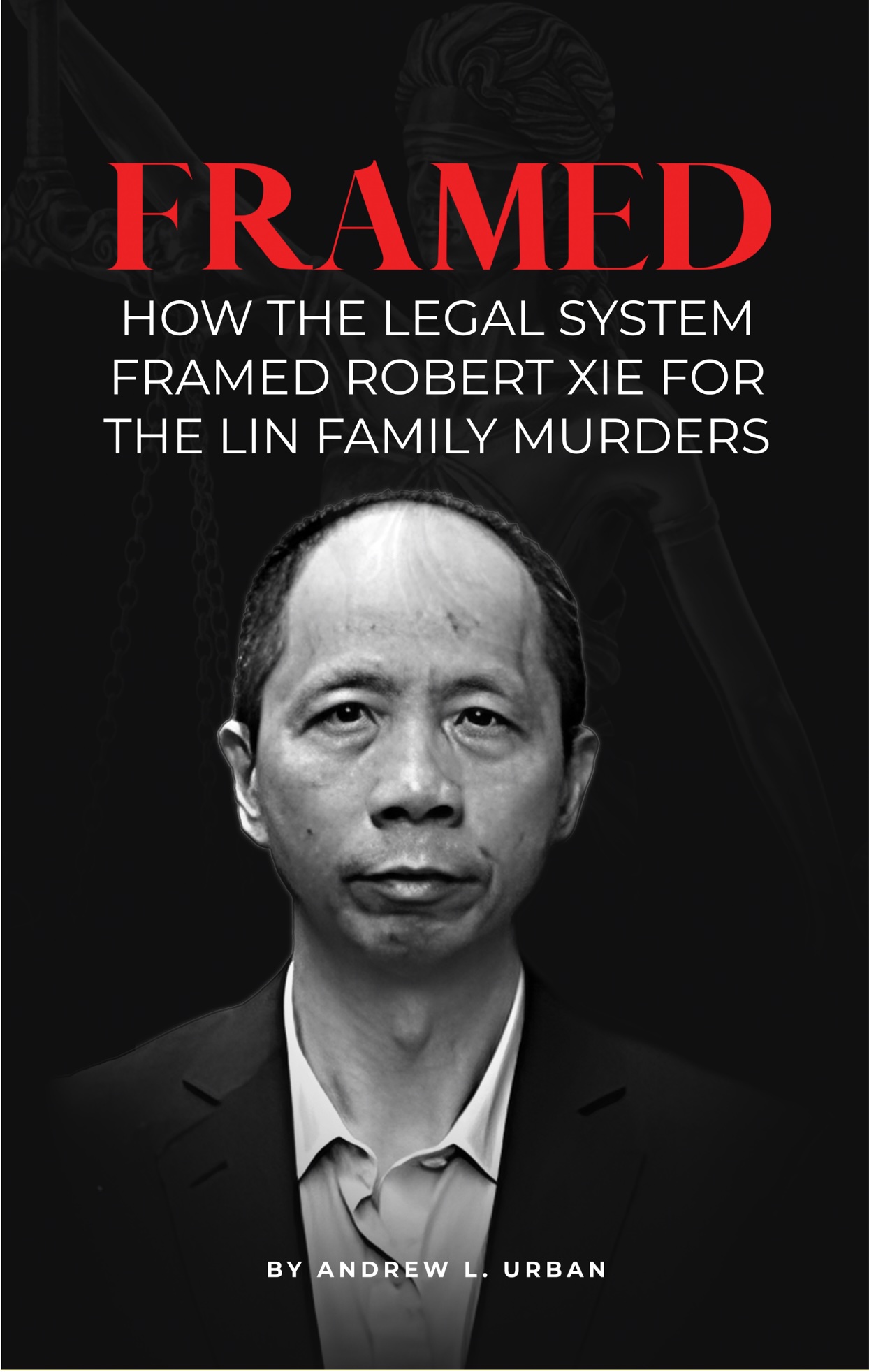 His conviction – going against his alibi and absent a credible motive – rests on just a couple of unreliable elements that the prosecution urged the jury to accept as reliable evidence, to negate Xie’s alibi.
Robert Xie always maintained and his wife Kathy Lin swore on oath that after they turned off their computers they went to bed in their Beck Street, Epping, home at around or shortly after 2am on July 18, 2009. Computer records confirm the timing. The prosecution set about establishing the time of the murders after 2am, with no supporting evidence; but it was essential for the prosecution’s narrative if Xie was to be found guilty.
“The Crown does not know exactly what time it was that the murders occurred,” said the prosecution in the opening address, “but our case is that it must have occurred after 2 o’clock in the morning, because you will hear that it is accepted that the accused had been at home with his wife using the internet until around this time. So it is at some point after 2 o’clock and before 5.30am.” This circular reasoning went unchallenged; the case had been built AROUND Robert Xie’s alibi until 2am.
Forensic pathologist Dr Rebecca Irvine agreed with defence counsel that Min (the father in the family) could well have been killed any time between 10pm or so (when he arrived home) and 2am.
To counter Kathy Lin’s confirmation of the alibi for the time after 2am, police formulated a plan to get around it. A known criminal, designated Witness A, awaiting trial in the same facility where Xie was held on remand, was recruited to try and trap Xie in covert recordings (hoping for some benefit for himself) that would counter the alibi by supporting the police speculation that Robert must have sedated Kathy. The result of the recordings by Witness A, scratchy audio that only a profoundly biased ear would accept as evidence beyond reasonable doubt, was the basis of the proposition put to the jury. Her Honour’s directions to the jury on Witness A’s evidence included 13 points on which to doubt that evidence.
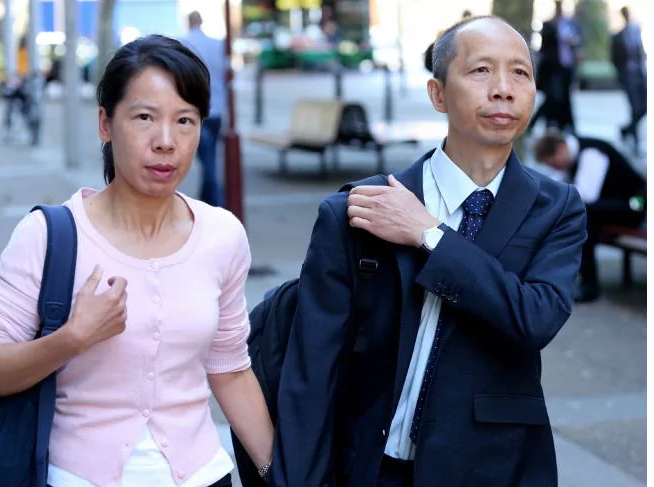
Kathy Lin and Robert Xie outside court (News Corp)
The Crown was asking the court to accept that a man, with broken English and with no criminal record, claiming innocence of the murder charge against him, would admit to a ‘seasoned criminal’ (as Her Honour put it) in jail, the suggestion that he sedated his wife so he could murder five of her family 200 meters away. It is disappointing, you might think, that the Crown relied on such flimsy material to launch its prosecution.
Acclaimed senior forensic psychologist Professor Ian Coyle, Fellow of the College of Forensic Psychology of the Australian Psychological Society has seen hundreds of instances of criminal and/or psychotic behaviour and is certain that there is nothing in Xie’s profile that fits the behaviour of which he was accused.
As he sees it: “The Crown asserts that, out of the blue, with no psychological or violence markers in his profile, Robert Xie, after sedating his wife, gets up in the middle of the night, brutally murders five members of the Lin family and goes back to bed all within three and half hours. Yet there was no psychopharmacological evidence that she was drugged.
“From a forensic psychological perspective, it is apparent that whoever killed the victims and bashed the faces of the two adult victims so severely that their facial features were reduced to a bloodied mess was intent on ‘leaving a message’ or was a psychopath. There is no clinical evidence that Mr Xie is a psychopath.”
Needless to say, Xie appealed. His finances exhausted, Xie went to the appeal court represented by legal aid lawyers. He provided clear instructions – which were ignored. Sitting through the appeal was frustrating and deeply disappointing in the legal system and worse no doubt for Xie himself. It was a botched effort with days spent trying to convince the three judges about the contentious DNA evidence instead of just hanging the appeal on the alibi. (The DNA was found in a stain on Xie’s garage floor 200 metres from the crime scene.)
The following exchange took place with the jury absent (during the defence closing by Robert Webb appearing for Xie) –
WEBB: So if it may be submitted, your Honour, would your Honour permit and – would it be permissible for your Honour to say to the jury “if you thought in respect of the evidence of Kathy Lin that there was a reasonable possibility that Kathy Lin was not mistaken and gave honest evidence, that you’d be duty bound to acquit”?
HER HONOUR: I’m not sure that I’d go that far, Mr Webb.
Webb is asking the judge to outline a likely reason for the jury to entertain reasonable doubt, but Her Honour seems antipathetic to that crucial point.
Later, she tells the jury:
I direct you that if the Crown is to prove beyond reasonable doubt the first element of the offence of murder, the Crown must remove or eliminate to your satisfaction any reasonable possibility that the accused was at home in bed asleep with his wife at the time the deceased were killed.
If the Crown does not satisfy you beyond reasonable doubt to reject the alibi, it follows that the Crown will have failed to have proved the first element of the offence of murder and you must acquit the accused.
This direction is very close to the standard Alibi Direction outlined in the Bench Book. The only difference is the omission of the words “as asserted by the alibi evidence”. By that omission, Her Honour’s direction is not offering the jury the clear instruction that if they do entertain even “a reasonable possibility” of Kathy Lin’s evidence being true (‘as asserted…’), they must acquit.
The attacks on Kathy Lin’s evidence confirming the alibi – by the police and the judge – conspicuously ignored the context that Kathy had a loving relationship with her family and was devastated at the murders. Would she lie to protect her husband if she thought he was their murderer? That context was never put to the jury to determine in trial 4.
The allegation by Brenda (Robert’s then teenage niece) that he would ‘on repeated occasions’ go into the bedroom where she shared a bed with a young male in the family, W (name suppressed) – and sexually molest her, was not the case being prosecuted. He was never charged with that. Instead, it was used only to claim that her evidence negated Xie’s alibi. It was also suggested as a motive for the murders: getting rid of her family so Xie could continue offending. It was a stretch, but a damaging one.
The Crown argued that W was such a heavy sleeper he would not wake up when Xie was molesting Brenda next to him. So the prosecution was putting to the jury that not only did Xie risk his wife waking up when he was out of bed and discovering his behaviour, he also risked him being discovered by the youngster next to Brenda.
Her Honour directed the jury to take into account Brenda’s evidence. This, in Her Honour’s mind, made the evidence of Kathy Lin unreliable, because it showed Kathy Lin could often sleep through him getting in or out of bed.
That rationale offends logic and the laws of evidence. It cannot be known whether or not Kathy Lin woke up sometimes, never, always …. whenever Robert got out of bed when allegedly going to Brenda’s shared bedroom. The onus of proof is on the prosecution, to prove beyond reasonable doubt that the alibi was false.
Without any evidence of sedation, the assertion should not have been admissible.
The Bench Book rules state that “Where the Crown case rests substantially on circumstantial evidence a jury cannot return a guilty verdict unless the Crown has excluded all reasonable hypotheses consistent with innocence. It is not incumbent on the defence either to establish that some inference other than guilt should be drawn from the evidence or to prove particular facts tending to support such an inference. It is the duty of the trial judge to put to the jury with adequate assistance any matters which the jury, upon the evidence, could find for the accused.”
So if not Xie, who?
In trial 3, the court heard evidence that for some considerable time around the Lin family murders, an international drug syndicate was using a convenient system to smuggle contraband into Sydney. Many newsagents had installed sets of post office boxes in their front windows. Customers could obtain their mail at any time of the day or night and were not under surveillance. The Lins’ Epping newsagency provided such a service.
Border control was aware of what was going on; they would periodically intercept articles and confiscate them. It is unknown whether they took into account the difficulty they were creating for the newsagents when an expected article did not arrive.
Several customers of the newsagency testified (in trial 3) that they saw heated exchanges between Min Lin and other customers from time to time. Clearly not all contraband was seized, or even detected. There is no doubt there was a syndicate involved in the process; that’s Detective Sergeant Maree’s evidence from the AFP. Substantial amounts of drugs were involved, over a lengthy period of time, which could result in life sentences for the culprits.
It is not difficult to imagine that the dealers harboured suspicions that it was Min – or perhaps his wife Lily – intercepting some of the packages for his/their own benefit. They can hardly contact Border Control and make enquires. Min could recognise the regular recipients – a threat to their operations. That is a credible possible motive for the killings.
The extreme violence and barbarity of the murders made headlines around the world. What a clear warning to anyone thinking of cheating the syndicate.
In trial 4, the new defence team downsized the case for the ‘reasonable hypothesis consistent with innocence’, but it did call Mr Webster, an Australian Federal Police officer. He gave evidence in regard to the newsagency post boxes. He was asked about heroin, and the price of heroin as relevant to the issue of the consignments which were bound for the newsagency post boxes.
Nevertheless, this time, a majority of 11 to 1 voted ‘guilty’.
Notwithstanding, the public is entitled to entertain plenty of doubt and consider the Lin family murders unsolved; a cold case.
Andrew L. Urban is the author of Framed – how the legal system framed Robert Xie for the Lin family murders (Prime KDP), and four other books on wrongful convictions.
The book was launched by Stuart Tipple, the former lawyer for Lindy Chamberlain.
I’ve bought your book Andrew re this case, but, haven’t had a chance to read it yet. But, what I do know of this case, correct me if I’m wrong, is that none of Xie’s DNA was found at the massacre? I mean DNA that would indicate he was involved in a violent struggle, not the odd fingerprint or two, which, of course might be there given that he probably was an occasional visitor to his relatives’ home.
Furthermore, the only alleged blood DNA that could potentially link Xie to the Lin’s was not at the murder scene, but, was a tiny patch of fluid found in Xie’s garage? Not only was it in dispute as to whether this patch was even blood, but, even if so, it wouldn’t be unusual if the nephews had, on some visit, cut themselves playing in their uncle’s garage.
And, even if we did accept the prosecution’s attempt to discount Xie’s alibi, as well as their flawed argument as to the timings of the murder, it still doesn’t answer the question as to how did Xie, one skinny chinese guy, manage to brutally bludgeon 3 adults and 2 children to death? Furthermore, how did he get home within the prosecution’s alleged 3 hour window and there not be any forensic evidence of him having perpetrated such a massacre in his house or at the murder scene? Did he hire Martha Stewart to scrub down the house?
As for the niece’s claims, it seems that none of these are proven. And, it does seem far fetched that this “W” would not have woken. Furthermore, the fact that the identity of this person has been suppressed is problematic, because, we should be able to know who is this person? I realise the niece was very young at the time, but, how old was W? Were W and the niece’s stories and whereabouts scrutinised by the police? I do not wish to cast doubt on her story, but, my point is anyone close to the family should have been equally scrutinised to ensure that they had nothing to gain from the demise of the Lin family. There is also another possibility, that a traumatised young person could be influenced by the police’s version of events into believing that her uncle is a monster and therefore coached into what to say, “to put the bad guy away.” I hesitate in writing this, because, I don’t wish to demonise a young woman who has lost her whole family and also claims to have been molested. But, my point is did the police look closely into everyone connected to this family, for instance did they look for any documented evidence of anyone who hated any of the victims, or anyone who financially gained from their deaths? Or, did they just decide on the first convenient guy?
And, regardless of any of the niece’s claims about Xie, this still doesn’t account for how Xie managed to overcome 3 adults and 2 children and with minimal (and disputable) forensic evidence of his involvement in this massacre.
Something I’ve always wondered about too, is why would, Xie, a surgeon in his native China, choose such a method to dispatch anyone? Surely, with his medical knowledge he could think of more efficient methods? I realise Xie wasn’t a practising doctor in Australia, but, aren’t surgeons careful not to want to damage their hands? Of course, if such a crime was committed impulsively in a sudden rage it’s possible he could lose his logic. But, the prosecution themselves have put forward the idea that this is a planned attack.
But, lastly, what forensic evidence was left at the scene? Was there any unexplained DNA or other forensic evidence. And was there any attempt by the police to look at any other possibilities, other than zeroing on this one skinny, chinese guy?
As you say Andrew it’s entirely conceivable that this massacre was the work of a criminal gang. But, equally possible is that someone close to the family had something to gain from their deaths and either carried out the murders themselves or arranged for someone else to do it. Or, it could even be a random thrill killing.
There are so many possibilities, but, the one that seems the most far fetched to me is that one skinny chinese guy (with an alibi) managed to overpower 3 adults and 2 children and bludgeon them to death with next to no forensic evidence to even link him to the massacre.
And, the irony of all this is that Xie went through 4 trials before the prosecution managed to finally get him convicted! And, even then at the 4th trial the jury was unable to reach a unanimous verdict, prompting the judge to tell them that a majority verdict would do!
If that’s the lengths the law has to go to to convict someone then how can this be considered beyond a reasonable doubt?
Dee, you have identified just about all the issues that raise a doubt about the conviction…indeed, about Xie being charged in the first place. The legal system has framed Robert and willwear the shame of it for the rest of time.
Thanks for confirming that Andrew. Is there anything the general public can do to help this man? I think part of the problem is that hardly anyone seems to know about this case, as horrific as it was. I think this is because it happened just before social media really exploded, so, it hasn’t really been on people’s radar. Therefore, there’s relatively little any information on the web about it.
In fact it seems Andrew you are just about the only person writing about the problems of this case. I certainly wouldn’t have known much about the case myself if it wasn’t for you. So, I commend you Andrew for shedding much needed light on this case and others where there appears to be miscarriages of justice.
But, you shouldn’t be the only person in media raising a spotlight on these cases.
Jack : As a sad further comment – It would certainty seem that many wrongful convictions are achieved using a jury fooling judge/police prosecutor team..
“The Hubristic Scoundrels ! ” – with backing from their great friend flexible forensics ! Fabricated/ planted then presented..blood in the Holden/Dinghy or garage floor. Would fool many a conscientious juror..the jury fooling lies – poor Mr Lim..Then – How many innocent citizens have spent many years in prison… ..courtesy of the seemingly half-witted appeals court teams.. ? Even if you are shovelling shit in an abattoir- it’s a team sport..? But surely more honourable than doing over Mr Lim..?
Andrew : Sorry, another typo..Doing over the Lin and Xie Families- was meant..victims of “the team”! What kind of creatures work in our so called “Justice System”..? Allowing the vicious murderers of children to run free ? Quite likely a credible motive is known within and by our corrupted lot..
A pox on our legal profession and its corrupt practitioners. These people are professional liars and if you happen to get in their way, look out. Let’s hope the prosecutor, Mark Tedeschi, and his cohorts rot in hell.
It’s time to ditch the adversarial system of law and replace it with the inquisitorial model.
Jack : A citizen sitting in court claimed that the Police Prosecutor Tedeschism virtually screamed at Kathy Lim that she was a LIAR..! No disapproval shown from his judge mateship. Is it true that if a judge
“kow tows” to the Police Prosecutor (appropriately)/ it will do his future prospects no harm..? Looking at the “team” that did over Sue Neill-Fraser.