The appeal court in Bromley has fundamentally failed to pay due regard to the rule of law and to the well-established principles governing criminal appeals, according to Flinders University legal academics Dr Bob Moles and Bibi Sangha, as we first reported on July 2, 2018.
Derek Bromley’s arguably wrongful murder conviction launched one of the longest running battles against a miscarriage of justice, having begun 40 years ago. The Moles/Sangha report is a concise yet comprehensive “briefing note”, a deconstruction of how South Australia’s justice system lost its right to be called a ‘justice’ system.
The analysis by Moles and Sangha reveals deeply troubling behaviour by the appeal court – which follows deeply troubling behaviour by the legal system throughout the history of the case, after Bromley’s 1984 conviction. The appeal court effectively retried the case, egregiously contrary to the rules. They write:
It is our view that the appeal court in Bromley has fundamentally failed to pay due regard to the rule of law and to the well-established principles governing criminal appeals. The appellate function is to review the conduct of the trial to determine if appealable error has occurred. If it has, the proper procedure is to set aside the conviction, and in appropriate cases, allow for a retrial. Not to conduct that retrial before the appeal court.
It is not part of the appellate function to allow the Crown to present additional evidence on an appeal with a view to persuading the appeal court to dismiss serious errors at trial. If the Crown wishes to persuade a court of the guilt of an accused person, it had to be done in front of a jury, with the facts to be determined by the jury. In this case the appeal court has, in effect, abolished the right to a jury trial, and at the same time abolished the right of a wrongfully convicted person to an effective appeal and to a retrial.
There is well established authority to support the view that the appeal court cannot usurp the function of the jury. It is not permissible for an appeal court to uphold a guilty verdict on the basis of evidence which has not been put to a jury. Especially is this so where the additional evidence was in the possession of the prosecution at the time of the trial but not then used by them. If the evidence was in fact ‘extremely probative of the appellant’s guilt’, then why was it not presented by the Crown at the time of the trial?
Current status as at May 2026:
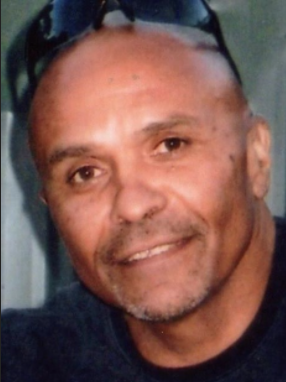
Derek Bromley (2009)
Ngarrindjeri and Narungga man Bromley was sentenced to life imprisonment by the South Australian Supreme Court on 14 March 1985, for the murder of Stephen Docoza, who was bludgeoned to death on 4 April 1984 and was found floating in Adelaide’s River Torrens days later. Bromley’s case is significant as he’s maintained his innocence ever since. Indeed, Bromley was the longest serving inmate in Australia claiming to be innocent.
Bromley was released on parole in March 2024. In its decision against his May 2023 appeal, the High Court accepted (3:2) that the witness (Gary Carter, suffering a schizoaffective disorder at the time) had credibility problems (mental impairment, inconsistencies) but said that juries are entitled to believe imperfect witnesses and that there was some corroboration of parts of the account. Dissenting Justices were highly critical of the reliability of the key eyewitness, Gary Carter, who suffered from severe mental illness.
As his case now stands, his original conviction was based on Dr Colin Manock’s impermissible (fraudulent) forensic evidence, his appeal was mangled by the court’s erroneous approach and the High Court dismissed his final appeal because the jury was entitled to believe a mentally ill witness. That is three strikes against the system … actually, it is four; the first appeal was dismissed, the second appeal heard and dismissed in 2022.
The learned judges who delivered these decisions:
1985 trial – Justice Mathieson (trial with jury)
2018 appeal – Peek, Stanley, Nicholson JJ
2022 appeal – Keane J, Edelman J, Steward J
2023 High Court appeal – Gageler CJ, Gleeson J, Jagot J (majority) Edelman J, Steward J (dissenting)
The legal system, after all, is the sum of all its participants.
Andrew. Me being as thick as a bowl of a Scottish persons breakfast porridge- there is some thing bothering me (a bit). Why was Derrick Bromley released after 40 years if he didn’t admit guilt? If this option was always available to our dear leaders – why wasn’t Derrick released 30 years ago ? Isn’t 10 years the usual for the innocent in the South Australian Gulag system ? Actually NO ! The innocent little Ray Bailey was murdered by a South Australian judge. A tortured Queensland police confession and ludicrous flexible forensics. BFM..Before Manockistic i think..? Derrick Bromley was lucky the old South Australian innocent blood soaked Government rope wasn’t strung up for his neck.. Fairs fair- blast it..! Hanging the innocent is great fun- especially if the head departs the torso..The claimed North Korean anti-aircraft cannon to the head (and body) seems more efficient – just sweep up the residue into a Chinese plastic bucket..Andrew- if your not careful -Mr Fennell will take your job…clever little lamb..a good team youse is…! Love your archives..
I think it is mentioned in one of the posts that Derek (not Derrick, BTW) was finally released on parole in the wake of the High Court’s split decision, where two of the judges dissented, preferring to quash the conviction.
Andrew. There still doesn’t seem to be a convincing explanation as to how Derek Bromley could be released without an admission of guilt ? Wasn’t it known 30 years ago that Mr Manock was a seriously silly person ? Is it not just a little suspicious that this is the same river bank where the South Australian Police murdered Dr.George Duncan.. Were there any South Australian police prowling the river bank when Stephen Dokoza went for the traditional police swim ? After all – the fountains of wisdom must consider previous..tendency evidence ?
Response to the Article and Comments: An Analysis of the Derek Bromley Case
Having reviewed the 2018 briefing note by Dr Bob Moles and Bibi Sangha, along with associated commentary, Derek Bromley maintains his longstanding position of innocence in the 1984 murder conviction of Stephen Docoza.
The case highlights serious concerns regarding the reliability of key evidence at trial, particularly the eyewitness testimony of Gary Carter and the forensic pathology evidence of Dr Colin Manock and the application of appellate principles under South Australia’s “new right of appeal.”
This analysis is grounded in publicly available court judgments and reputable reporting. For full primary documents, refer to the High Court and Supreme Court of South Australia records, or the Networked Knowledge archive.
Case Overview and Research Summary
Derek Bromley and co-accused John Karpany were convicted in 1985 of the murder of Stephen Docoza, whose body was recovered from the River Torrens in Adelaide on 4 April 1984. The prosecution alleged an assault involving demands for sexual activity, violence, and drowning. Bromley has consistently denied involvement.
Key Issues Raised in the 2018 Appeal (R v Bromley [2018] SASCFC 41):
• Eyewitness Evidence: Five expert reports addressed Gary Carter’s schizo-affective disorder, hallucinations, and delusions on the night in question. Experts, including the Crown’s, opined that Carter’s uncorroborated identifications lacked probative value, and the trial judge’s directions were inadequate. Current understanding of such disorders has advanced significantly since 1984, satisfying the “fresh” evidence test.
• Forensic Pathology: Three experts (including those aligned with prior Keogh proceedings) criticised Dr Manock’s autopsy. The drowning diagnosis was unsupported; the cause of death should be “undetermined.” Putrefaction over five days in the river made precise timing or causation of injuries impossible. Many injuries were consistent with post-mortem river damage. Dr Manock’s autopsy was deemed fundamentally inadequate.
The Court of Criminal Appeal admitted propensity evidence from Bromley’s prior conviction (detailed below) and found the fresh evidence insufficiently compelling in the “interests of justice,” which the court interpreted as requiring consideration of both acquitting the innocent and convicting the guilty.
Moles and Sangha argue this approach deviates from established appellate principles, effectively allowing the appeal court to conduct a retrial and usurp the jury’s role.
This view aligns with longstanding authority that appellate courts review for error at trial and, where a substantial miscarriage occurs, typically order a retrial rather than resolve disputed facts themselves (see, e.g., principles in M v The Queen (1994) 181 CLR 487 and Fennell v The Queen (2019) 268 CLR 400, emphasising the jury’s primacy in fact-finding).
Subsequent High Court proceedings (Bromley v The King [2023] HCA 42) saw a 3-2 split. The majority dismissed special leave, upholding the view that the fresh psychiatric evidence was not “highly probative” in context. Justices Edelman and Steward dissented, finding a significant possibility of innocence and that the interests of justice favoured further appeal.
Bromley was granted parole in March 2024 and released in July 2024 after 40 years, having maintained innocence throughout.
Prior Convictions: Clarification of Facts
Commentators (e.g., Joe Smith, Jane Austin) reference prior sexual offending.
Accurate records confirm: Bromley had a prior conviction for attempted rape (not rape) arising from a 1981 incident involving a 15-year-old male (or around that age). No completed rape occurred, and forensic claims (e.g., semen) in some comments are inaccurate embellishments, as corrected in forum responses and trial materials.
Court documents note a broader criminal history, including violence, but the 1981 matter was the relevant propensity evidence admitted on appeal. Claims of “lengthy criminal record for raping young boys,” prison admissions in documentaries, or specific details about Tony Verrel lack substantiation in reliable sources and were refuted contemporaneously (e.g., by Robyn Milera). Bromley was released from that earlier sentence shortly before the Docoza matter.
These facts are matters of public record from judgments and do not alter the fundamental evidentiary weaknesses in the murder trial.
Refutation of Specific Inaccurate Comments
Well-researched contributions (e.g., from Robyn Milera, Garry Stannus, and SH) appropriately highlight complexities, the need for caution with eyewitness and forensic evidence, and systemic issues. They warrant careful consideration.
In contrast, certain assertions require factual correction:
• Joe Smith’s claims (rape conviction, semen evidence, lengthy record of raping boys, documentary admission): These are not supported. The prior matter was attempted rape with no completed act or matching forensic link as alleged. No verified record of multiple child rape convictions exists. Documentary claims are contradicted by direct review. Such statements exemplify reliance on unverified prison rumour.
• Assertions that Dr Manock’s errors are mere “technicalities” (Brian Johnston): Dr Manock’s lack of specialist qualifications, documented incompetence (e.g., in Keogh and other cases), and specific errors here (misdiagnosis of drowning, injury timing) go beyond technicalities. Multiple independent experts and prior judicial findings (including in Keogh) substantiate systemic concerns with his evidence.
These corrections rely on primary court records, expert reports, and judgments rather than anecdote.
Recent and Related Developments
• High Court 2023: As noted, split decision closed the appeal pathway on the psychiatric evidence.
• Parole and Release (2024): Granted after repeated applications, reflecting the parole board’s assessment despite maintained innocence.
• Ongoing Scholarship: Recent articles by Moles and Sangha (2025) in the Criminal Law Journal analyse the Bromley appeal’s implications for second/subsequent appeal mechanisms across Australia, arguing for clearer adherence to rule-of-law principles and potential establishment of a Criminal Cases Review Commission.
Cases like Keogh (where similar Manock evidence led to quashing) and broader inquiries into forensic reliability provide comparative authority. Principles from Mallard v The Queen (2005) 224 CLR 125 on fresh evidence and prosecutorial duties remain pertinent.
The 2018 article by Moles and Sangha is a measured, well-researched contribution grounded in expert evidence and legal principle. It properly questions whether the appeal court adequately discharged its review function or impermissibly supplemented the Crown case. While Bromley’s prior record is relevant context, it does not resolve the core unreliability issues with Carter’s testimony and Manock’s pathology in the murder trial.
The case underscores the importance of rigorous scrutiny of identification evidence from witnesses with significant mental health challenges and forensic opinions from practitioners whose qualifications and methods have faced sustained criticism. Australian appellate law emphasises safeguards against wrongful conviction; departures invite public and professional concern. Bromley’s prolonged incarceration and eventual parole, while maintaining innocence, exemplify the human cost of such processes.
Further independent review mechanisms could strengthen public confidence in the justice system.
Sources (Footnotes/Bibliography)
1. R v Bromley [2018] SASCFC 41 (Supreme Court of South Australia, Court of Criminal Appeal). Available via networkedknowledge or AustLII.
2. Moles, R. & Sangha, B. (5 July 2018) Briefing Note re R v Bromley [2018] SASCFC 41. Networked Knowledge.
3. Bromley v The King [2023] HCA 42 (13 December 2023). High Court of Australia.
4. ABC News reports on parole (March & July 2024).
5. Networked Knowledge Derek Bromley case materials (netk.net.au/Bromley).
6. Various analyses on Dr Manock’s evidence in Bromley and Keogh contexts.
I pass on an interesting comment by Bob Moles:
In relation to the comments by Steven Fennell (which I very much appreciate) there is one small blip. He mentions that the dissenting judgment in the High Court in the case of Derek Bromley favoured ‘further appeal’. After a determination by the High Court, there is no further avenue for another ‘appeal’.
However, as I have published many times, Derek Bromley does have the opportunity to bring a further procedure which, it should be noted, is not an appeal.
It is a fresh action to a single judge of the Supreme Court, not an appeal, and would be based upon the fact that his conviction had been obtained by fraud.
In the HC appeal, the two dissenting judges (Edelman and Steward) said they would order a grant of leave to appeal, recognise that there had been a substantial miscarriage of justice and order a verdict of acquittal be entered.
There is an interesting twist to this position.
The majority judges said they would ‘refuse leave to appeal’.
In the cases of Burrell and Milat, the High Court determined that before the grant of leave to appeal the jurisdiction of the High Court has not been engaged.
So, the three judges in were not delivering a judgment ‘of the High Court’ because they had not engaged the jurisdiction of the court.
Perhaps that is why they said their reasons did not constitute a precedent of the HC.
When I looked up the webpage for the HC it stated that the jurisdiction of the High Court can be engaged by any two or more judges acting on behalf of the High Court.
If that was correct, then it meant that Edelman and Steward had engaged the jurisdiction of the court and in that capacity had overturned the Bromley conviction.
Before publishing my view I thought it best to check the Judiciary Act. Unfortunately, it stated that on an appeal from the Full Court of the appeal court, three judges were required to determine an appeal.
It seemed strange that the HC website had not made that point clear. And of course most unfortunate for Derek Bromley.
Yes Andrew; you are correct I should have said procedure not appeal, and as one of thoses with both OCD and ABI (acquired brain injury) even those small errors tend to play on my mind.