It’s not enough to be innocent of the charges … In this frank and fascinating personal two-part account, Steven Fennell, who fought relentlessly to have his wrongful murder conviction overturned, lays out the brutal reality of a legal system in which the first major hurdle is money. But there are others …
Everyone knows that you need lots of money to defend a case in court. Shouldn’t of course … and the more serious crimes cost more serious money to defend. Wealthy defendants get better representation, Steven argues in Part 1, and perhaps better results.
 In Part 2, Steven recounts his personal marathon through the legal system which reveals that, despite being expensive, the system too often delivers unjust results. A guilty verdict at trial and a failed appeal had to be corrected at the High Court. But that was after he had spent 2,373 days in prison.
PART 1 The high costs of justice
Australia’s criminal courts have become a financial meat grinder for the average citizen. Legal representation, disbursements, lost wages during years of delays, and the indirect costs of pre-trial detention or bail conditions are now so astronomical that they lie far beyond the reach of ordinary working people. A single complex Supreme Court trial can easily run into hundreds of thousands of dollars in private fees; add an appeal or two and the bill climbs into the millions. Court-imposed fines, victim levies, and the everyday expenses of fighting a case. Then add in travel, childcare, time off work all only deepen the hole. For the vast majority of Australians, these costs are simply unaffordable. The result is a two-tiered system of justice: those who can pay for elite legal talent walk away with acquittals, favourable pleas, or reduced sentences, while everyone else is left to the mercy of under-resourced legal aid and systemic pressure to plead guilty.
The disparity is glaring and direct. Wealthy defendants or those with access to high-net-worth supporters can brief senior counsel of the calibre of Saul Holt KC, who commands daily rates approximately $6,000 – $10,000 or more in major criminal matters. That quality of advocacy, meticulous cross-examination, and expert evidence challenges, and relentless pressure on weak prosecutions translates into tangible outcomes. Tangible outcome such as fewer convictions, lighter penalties, or cases abandoned altogether. In contrast, the average accused relies on Legal Aid Queensland grants that are capped, means-tested, and often insufficient for the full scope of a serious case. The state effectively rations justice by rationing money. The rich buy better results; the rest take what they are given.
Recent high-profile cases lay bare the human and financial toll. Bruce Lehrmann’s defamation proceedings, stemming directly from a high-stakes criminal allegation culminated on 9 April 2026 when the High Court refused his application for special leave to appeal. As the unsuccessful party, he was ordered to pay the respondents’ costs on top of an already crushing bill estimated at more than $2.5 million. Even in the civil sphere, the financial destruction is total. In the criminal arena, the numbers are no kinder.
I was wrongfully convicted of murder in Queensland in 2016 on flimsy circumstantial evidence, spent 2,373 days in prison before the High Court quashed my conviction in 2019. For my appeals, I relied entirely on Legal Aid Queensland. Using the current criminal fee scales, a realistic estimate of the publicly funded costs across trial, the failed Court of Appeal, and the High Court appeal sits between $200,000 and $350,000 dramatically lower than private rates. Yet my family still carried the indirect burden: lost income, family disruption, and the need to launch a civil damages claim for redress. No automatic repayment followed my exoneration.*
disputed diagnoses
Women have fared no better in emotionally charged cases resting on contested medical evidence. Kathleen Folbigg spent 20 years in prison after her 2003 conviction for murdering her four infant children. Genetic science later proved the deaths were natural; her convictions were quashed in 2023. She was offered just $2 million in compensation a sum her lawyers branded “profoundly unfair and unjust.” Many such cases involving infant deaths have turned on disputed diagnoses, including allegations of shaken baby syndrome, where flawed medical orthodoxy has repeatedly contributed to miscarriages of justice against mothers.
Legal aid and pro-bono support carried Folbigg’s defence, but two decades of lost life and earning capacity cannot be measured in legal-aid grants. The state spent nothing extra to correct its own error.
State governments love to spruik “law and order.” They promise more police, tougher sentences, and zero tolerance for crime. Yet they abandon the very courts that are supposed to deliver that justice. Queensland’s magistrate’s courts are mired in “glacial” delays; serious criminal cases now routinely take years to reach committal, with some spending more than three years in procedural limbo before trial. Supreme Court judges have publicly condemned the backlog as “excruciating.” They want law and order on the cheap; all roar, no resources.
The same governments that rail against soft-on-crime judges and defence lawyers simultaneously starve the courts of sitting days, judges, and support staff. The consequence is predictable: innocent people may plead guilty simply to escape the financial and personal ruin of endless adjournments and mounting costs.
They’re all “tough on crime” on the talkback circuit, but strangely allergic to funding the actual courts that are supposed to dish it out. Nothing says ‘law and order’ quite like governments screaming about soft judges while deliberately starving the courts into a coma.
The consequence is predictable: innocent people sometimes plead guilty simply to escape the financial and personal ruin of endless adjournments and mounting costs. They promise “tough on crime,” but deliver “tough luck on timing.” The tough-on-crime rhetoric is hollow when the system cannot even process cases in a timely manner. All roar on the hustings, all crawl in the court listings.
dedicated, ring-fenced Appeals Fund
I posit one structural reform that would force governments to internalise these failures and change behaviour. On every successful appeal at any level whether in the Court of Appeal, the Full Federal Court, or the High Court, the state of conviction should be liable for a punitive payment into a dedicated, ring-fenced Appeals Fund. This fund must be completely separate from ordinary legal-aid budgets; otherwise governments will simply offset the cost by slashing aid grants elsewhere.
If legal aid expended $100,000 on a successful appeal, the state could be required to contribute 300%—$300,000—into the fund. The money would be directed explicitly to three purposes: (1) topping up funding for future meritorious appeals that fall outside standard legal-aid criteria; (2) independent research into systemic causes of wrongful convictions and strategies to prevent them; and (3) ex-gratia compensation schemes for the exonerated, removing the need for costly civil litigation against the state. The mechanism is simple deterrence.
Police would face stronger incentives to gather robust, admissible evidence rather than relying on tunnel vision or shortcuts. Prosecutors in the Office of the Director of Public Prosecutions would think twice before running weak or speculative cases—because the system would finally put real skin in their game. Junior prosecutors who repeatedly send cases to trial that collapse mid-hearing, are thrown out on a no-case submission, or are quashed on appeal cases that, on any honest assessment of the brief, should never have been listed in the first place would face automatic demotion.
No more running serious matters, no more career ladder, just a quiet return to summary briefs and traffic court. Conversely, those with the professional courage to flag insufficient evidence early, escalate it to their Legal Practice Manager or Crown Prosecutor, and recommend discontinuance would be fast-tracked for promotion, because stopping a dud prosecution before it wastes court time, public money, and an innocent person’s life would finally be treated as the highest form of public service, not career suicide. The financial pain would be felt exactly where it belongs: at the point of decision-making, not on the backs of the wrongly accused.
Criminal justice is not supposed to be a luxury good available only to those who can write the biggest cheques. When ordinary Australians cannot afford to defend themselves properly, when governments preach law and order while presiding over collapsing courts, and when the wrongly convicted are left financially ruined, the entire system loses legitimacy.
The punitive Appeals Fund is not radical redistribution; it is basic accountability. It would make the state pay a real price for its mistakes and, over time, drive down the very costs both human and financial that currently bankrupt the innocent while letting the guilty walk free or the powerful escape with minimal penalty.
Until governments are forced to feel the same sting they inflict on citizens, the high costs of justice will continue to deliver two kinds of outcomes: one for the rich, and one for everyone else.

PART 2 My Personal Reflection on Legal Aid, the Right Team, and Why Ordinary Australians Deserve Better
When I sent Andrew Urban my draft essay “The High Costs of Justice” on 10 April 2026, I never imagined how quickly it would turn into a deeply personal conversation. Andrew’s reply reminded me of his November 2025 piece on the Crown’s overwhelming resources versus the accused, and he agreed that the system creates a two-tiered reality. He noted that the rich don’t always win, citing Kerry Stokes in the Ben Roberts-Smith matter but added that he believed Robert Xie’s appeal would probably have succeeded with private, expensive counsel rather than the legal-aid team he observed first-hand. I completely agree with Andrew on that. From what I saw and read, Robert Xie’s case cried out for the kind of relentless, client-focused advocacy that money can buy. Instead, the limitations of legal aid left him with counsel who, in Andrew’s direct observation, seemed stubborn and unwilling to adapt. (And his wrongful conviction…)
I’m not here to boast or claim I’m some legal expert. Far from it. I’m just an ordinary Queenslander who spent 2,373 days in prison for a crime I didn’t commit. I do have some personality quirks that, for better or worse, helped me in my fight for justice. I suffer with an acquired brain injury, from an explosion and house fire back in 1980, which left me with significant memory issues, a real personal handicap that made everything harder.
stubborn persistence
But I also live with OCD, which turned out to be both an affliction and, in this situation, a strange kind of gift. It drove me to be utterly relentless in researching every legal angle and every police rule I could get my hands on.
While locked up I requested law books and information from community legal centres right across Australia. I asked for any out-of-date law books to be donated to the prison library for my access (because even legal books can’t be sent directly to prisoners). I wrote more than 324 blue letters – the confidential, privileged letters that Queensland prisoners can send in special blue envelopes to authorities, politicians, the Ombudsman and others without prison staff opening them.
I wrote directly to every single Queensland politician. I wrote to individual police officers asking for statements and for evidence that had been logged but never supplied to me. I wrote to the Queensland Police Service advising them that important evidence that was collected and existed but hadn’t been logged at all. I sent reams of correspondence to the Office of the Director of Public Prosecutions, which, as far as I could tell, simply ignored me. My OCD, coupled with what I can only describe as a stubborn persistence I didn’t even know I possessed, kept me going when most people would have given up.
While in prison I also witnessed first-hand a quieter kind of discrimination that rarely makes the headlines. Lawyers funded by Legal Aid Queensland would sometimes ask for a private “top-up” from families who could scrape the money together. A practice I understood to be common and unlawful. Those with money or connections got the best lawyers and barristers. The rest of us got what the system rationed out.
In my own High Court appeal (Fennell v The Queen [2019] HCA 37), Legal Aid Queensland initially turned down funding. They had appointed Jeffrey Hunter KC – a Pre-eminent senior counsel listed in Doyle’s Guide and a highly respected figure in Queensland criminal law to review whether my case had merit. Jeff Hunter is undoubtedly a talented barrister with a formidable career, including ten years at the Office of the Director of Public Prosecutions. I have no doubt he is great at what he does. But from my experience (and I can only speak for myself), his approach did not involve direct contact with me as the client. My LAQ-appointed lawyer at the time, Eloise Strofield, passed on my requests, but Hunter conducted the evaluation without speaking to me or, in my view, having all the material I believed was essential. He concluded the case lacked merit. That decision nearly ended my appeal before it began.
I was devastated but not defeated. I wrote my own appeal against LAQ’s refusal, carefully setting out the merits point by point. My request to have Hunters decision reviewed went to an independent external review officer: Terry Fisher of Fisher Dore Lawyers. Terry, a consultant at Fisher Dore with decades of experience in high-profile criminal and administrative law cases, has served as an LAQ external review officer since 2013. He is known for providing that crucial “safety valve” when internal decisions need fresh eyes. Terry read what I had written, considered the full picture and agreed the case had merit. Funding was approved.
Even then, I had to repeat everything I had demonstrated to LAQ directly to my appointed lawyer, who would then translate my points into proper legal language for the team. Only after that could I choose my team from the limited options available under legal aid. I selected Andrew Anderson, then principal of Anderson Fredericks Turner Lawyers in Brisbane, as my instructing solicitor. Andrew had a strong track record in criminal defence and appeals and just as importantly to me, he actually listened and engaged. He convinced Saul Holt KC (the Market Leader in Doyle’s Guide for Queensland criminal law senior counsel) to take the brief. It was no small feat; Saul is in the top tier for a reason, commanding the kind of daily rates that most ordinary Australians could never afford. Assisting Saul was junior barrister Kate Gover, who was absolutely brilliant. She took the time to come into the prison and speak with me directly. She clarified facts that earlier lawyers had simply assumed were correct, assumptions that were wrong and could have sunk the appeal. Her willingness to listen and Andrew’s skills to get the details right made all the difference.
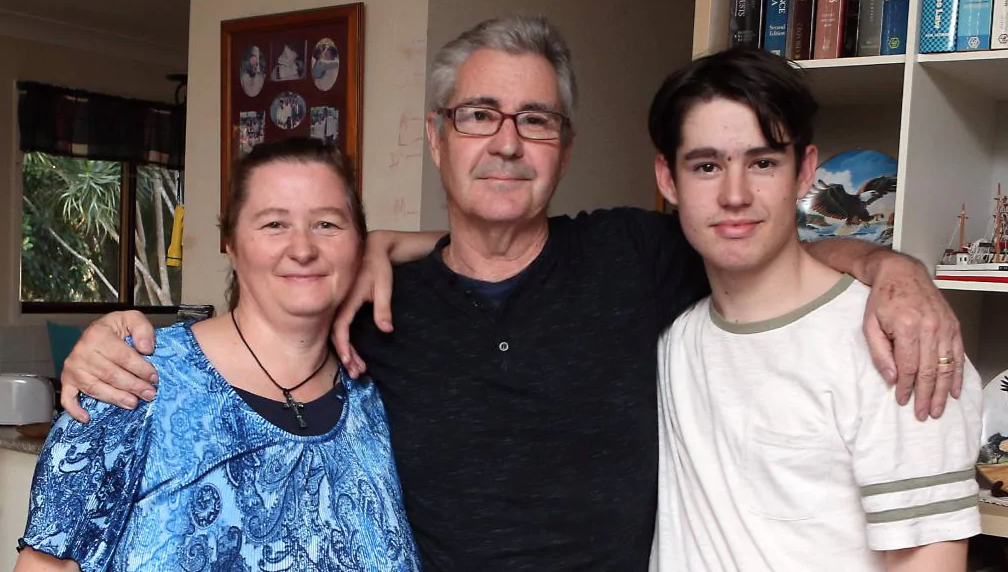
Steven Fennell with his wife Helen and son Adam (supplied)
I was incredibly fortunate. With that team, Andrew’s strategic persistence, Kate’s meticulous client engagement, and Saul’s powerful advocacy, the High Court quashed my conviction and entered a verdict of acquittal on 11 September 2019. I can state, with genuine humility and gratitude, that I believe we achieved the right result. But here’s the honest truth I keep coming back to: even under legal aid, success depended on me fighting the system just to secure the right people for the task. Most accused people don’t have the knowledge, the energy, or the sheer stubbornness to do what I did. They take what they’re given – or plead guilty to escape the financial and emotional meat grinder.
That is exactly the two-tiered system I described in my original essay. Wealthy defendants brief the Saul Holts and Jeffrey Hunters of the world from day one, with open chequebooks and no bureaucratic hurdles. The rest of us rely on capped, means-tested grants that ration justice. Court delays in Queensland magistrates’ courts are glacial; governments talk tough on crime but starve the courts of resources, pushing innocent people to plead guilty just to stop the bleeding of lost wages, travel, childcare and mounting stress.
I’m not angry at Jeffrey Hunter ; he may well be outstanding in the right context but his hands-off style with clients (at least in my case) would not, in my honest opinion, have produced the same outcome. The team I eventually assembled did, because they treated me as a human being with critical information to contribute**, not just another file.
This experience reinforces everything in my original piece. Criminal justice should not be a luxury good. My punitive Appeals Fund proposal requiring the state to pay a multiple of legal-aid costs into a ring-fenced fund on every successful appeal is not radical. It is basic accountability. The money would top up future meritorious appeals, fund research into wrongful convictions, and provide fair ex-gratia compensation so the exonerated don’t have to sue the state in yet another costly civil claim. It would force police and prosecutors to think twice before running weak cases, and it would reward those brave enough to kill dud prosecutions early rather than letting them destroy lives.
I am humbled every day that I walk free. But thousands of other ordinary Australians – like Robert Xie – remain trapped in the same unequal system. Until governments feel the same financial sting they inflict on us, the high costs of justice will continue to deliver one kind of outcome for the rich and another for everyone else. I’m grateful beyond words to Andrew Anderson, Kate Gover, Saul Holt KC, Terry Fisher, and everyone who fought alongside me.
Now it’s time the system fought fairly for the rest of us.
*We have published a comprehensive (and depressing) report on the subject of compensation
**Exactly what happened when Robert Xie tried to steer the legal aid lawyers at his appeal: they ignored his first-hand knowledge of his own case. And his wishes. And they lost.
*****
Three of five recent books by Andrew L. Urban exposing wrongful convictions: