Andrew L. Urban
Garry Nye attended his own wake; I was invited. My book-length story on his life and troubles was well advanced. It turned out to be my first wrongful conviction report. Not long after, I wrote his obituary for The Australian. He had been determined: “For what they did to me and my family I wanted to get the bastards back.” Just days after he hosted his own wake at a Rooty Hill pub (21/2/2004), Garry Nye passed away (1/3/2004, age 51) and was buried next to his mother’s grave at Rooty Hill on March 6, 2004 – her birthday.
THE ARREST AT COLO July 24, 1991
Fog hides the bush outside the house in the valley, and the winter cold grips the windows as dawn breaks. Kerrie Nye has just got up, to get breakfast ready for the boys before school. The phone rings; it’s a policewoman. “We want to speak to Garry Nye.” Kerrie’s instincts respond but she stays calm. Calls out to Garry. The voice on the phone is cold. “This is the NSW Police. We want you and your family to come out of the house with your hands up. You come out last.” Garry hangs up. Then he sees and hears a police helicopter swing low and close by the house, and an officer in the open hatch. The noise is ear-shattering. The children are scared, nervous.
As they open the door, the cold air hits and the screaming starts. Police are everywhere. A half dozen jump out from the bushes in the front, in the black uniform of the Tactical Response Group, yelling orders. The helicopter shreds air noisily above. More police drive up in a dozen cars. More yelling. Garry is pushed to the ground, still in just his pyjama pants. The ground is almost frozen. He’s handcuffed and held down. “What’s the charge?” He yells.
“You murdered Ray Thurgar…” someone yells back. Nye replies: “Who the fuck is Ray Thurgar?” It took a long time for Garry to get an answer to that question.
As he’s, lying face down in handcuffs, he vows to “get the bastards back”. He hears his children being yelled at. The two older ones, Adam and a visiting friend are handcuffed. Kerrie is handcuffed. The two younger boys, Dylan and Corey are left standing in the front yard, fending for themselves as best they can, in their PJs. Everyone is shivering, even the rugged-up cops holding the automatic weapons.
Then the handcuffed waiting continues as the house is searched. This is conducted on the search and destroy model of house searches. Several officers storm in and ransack every cupboard, every shelf, every drawer, scattering contents all over the floor, smashing containers and cracking walls. The fridge is upended. Mattresses are slit open. Boots crackle with foodstuffs on the kitchen floor, and by the time they finish, the house is not only comprehensively thrashed, but its occupants completely traumatised.
Finally, some three hours it all began, the caravan of dozens of police cars drives off with the four handcuffed prisoners, leaving the silence to return to the house with its gaping, lifeless windows and its doors ajar. And 14 year old Dylan and 13 year old Corey in the front yard in the cold July morning, shivering, scared and alone.
Justice had been served, and the daily papers are full of it the next day.
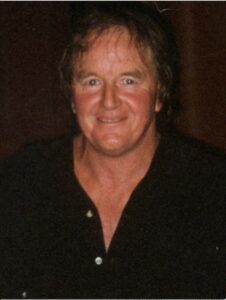
Garry Nye
After his eventual release from jail in 1978 (for a previous burglary in his teens), Nye began to put his life together. He soon met Kerrie and her three sons, Dylan, Adam, Corey and they had a son together, Joel; life was good and Nye was intent on giving his family (adopted or not) the opposite experience to what he had endured as a kid; the boys all had the best clothes, a safe, second hand car for their 17th birthday, plenty of affection – and Kerrie got flowers or chocolates every week. He was certainly no angel, but he protected and provided for his family.
***
Garry Nye took the DPP and senior police to court and sued for wrongful arrest and malicious prosecution, 12 years after the police raid on his home at Upper Colo on July 24, 1991. Some 15 months after his arrest, most of which he spent in Long Bay prison, he was acquitted of both charges against him: the murder of Roy Thurgar and conspiracy to supply cannabis. He was freed but lived in fear of his life for years; he feared the police who were involved in framing him. Police officers, some of whose careers would soon be cut short by the Royal Commission into Police Corruption. But not all. One of the senior detectives who ordered and orchestrated his arrest, Detective Inspector Gordon, was still in the police service and going about his business at the time of Nye’s death on March 1, 2004.
Eventually, he began searching for lawyers who’d take his case. In 1996, he found them. He met with Diana Farah, a partner at Carroll & O’Dea, who not only believed him but believed IN him. An experienced lawyer and used to making snapshot assessments of people, she felt he was “worth” it: and ‘it’ was a lengthy process of discovery, gathering thousands of documents over several years, culminating in the civil trial that came to an end on December 16, 2003. During all that time, Garry Nye was the legal team’s most remarkable resource; he knew everyone and everything connected or interconnected with the case. His determination fed directly into the team of solicitors and barristers. They were all charmed and impressed by the bloke who looked rough as guts but even managed to get a smile out of the opposition, the reserved defence council, Ian Temby QC. But that took a few weeks in court… the trial itself lasted 80 days, spread over several months.
Proving malicious intent: Acting Inspectors Ros KEYS and Peter DEVINE
The (then) junior barrister acting for Nye, David Baran, was lying propped up in bed, poring over documents of the case. It was well after midnight. He had on his lap the running sheet from Inspectors Ros Keys and Peter Devine, supposedly written up after their July 29 visit to Kerrie Nye, just five days after the violent arrest at Upper Colo. Kerrie Nye had claimed in court that she was visited by the two officers at her still dysfunctional home, with a question masquerading as a proposition: ‘What can we do for you if you forgot the alibi…’
But the running sheet, needless to say, made no reference to such a blatant attempt at witness manipulation.
It was a profoundly serious allegation to make and it would be Kerrie Nye’s word against the police. Even though Baran believed her, it could be thin ice in court. Unless there was something else to support her. The trial had been adjourned, and Baran had several weeks to prepare his cross examination of Keys.
The Nye team had gathered vast amounts of documentation. Baran had read the running sheet that was supposed to represent the content of discussions at Upper Colo on July 29 a dozen times. He had also read the statement of interview that was made at the time of Kerrie’s arrest by the same officers.
And now, with two weeks before he was to cross examine Keys, he read them all over again. And again. As he did, he noticed that the same set of words kept popping up in both documents. Baran, fervently following the golden rule of barristers to “read your brief” now saw why it was a golden rule. It was close to 3am when he matched actual sentences from the record of interview with the same sentences in the running sheet. Why were they identical? Then it clicked. The officers couldn’t get Kerrie Nye to do what they wanted – namely to perjure herself about Garry Nye’s alibi and thus strengthen the case against him – so they made up the story as to why they went out there.
In court Keys had said they went out there to comfort Kerrie Nye. This seemed far-fetched at best, even if you took a naïve view of the circumstances. Why would relatively senior officers drive three hours to Upper Colo, uninvited, and to perform counselling that was not their job. Especially officers who, according to Kerrie Nye, had not previously shown any sign of such concern for the Nyes.
That night, Baran felt confident that he had found the evidence that would back up Kerrie Nye’s claim. He went through the running sheet and meticulously marked every passage that had been lifted from the record of interview. It was going to be a good day in court.
Some days later, Baran walked Keys through the identical sets of words in the two documents, probing for answers that couldn’t be found. Keys was evasive and unconvincing, he felt, and an air of triumph floated over the Nye camp.
In his judgement, Justice O’Keefe was satisfied that on the balance of probabilities, Keys and Devine went to see Kerrie Nye at the direction of Gordon to try and convince her not to proffer the alibi for Garry. Kerrie Nye impressed him as a witness – Detective Keys did not. As it turned out, Kerrie’s word was enough for Justice O’Keefe; he preferred it to that of Keys.
This cross examination of Keys by Baran was the second major milestone, setting the scene in which senior police officers had acted not with mere negligence – but calculated malice. Notably, Devine sat outside the courtroom waiting to be called as a witness for the defence (the DPP et al). The call never came.
Proving malicious intent: Detective Inspector GORDON & the DPP
In 1992, Justice Wood had thrown the case out of court, acquitting Garry Nye of the charges against him: the murder of Ray Thurgar and conspiracy to supply cannabis resin (hashish). The police case had been “a load of rubbish,” he later remarked. In December 2003, Justice O’Keefe concluded that Garry Nye had indeed been the subject of wrongful arrest and malicious prosecution by the DPP and certain police officers; it was the first such case in Australia, and he awarded Nye $750,000 in punitive damages alone. The total award was $1.335 million (over $2 million today), which included loss of earnings, compensation for imprisonment and wrongful arrest.
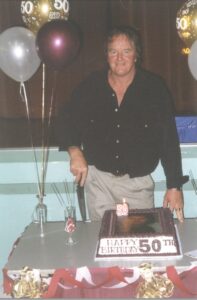
Garry Nye
But for Nye, this case was never about the money. He didn’t even stay in court to hear the arguments about the amounts. It was about setting the full record straight – and what Justice O’Keefe referred to as a judgement “to sting the defendants”.
His judgement sums up all the ugly facts of the case and underlines the contempt in which the police informant Danny Shakespeare is held by the court. It was Shakespeare who sang the song written by the corrupt police, with the backing of the DPP orchestra. But his testimony was so ludicrous and pathetic, the trial judge was seen rolling his eyes at it. Yet Shakespeare, a junkie with a long record of unreliable testimony, continued to be a puppet for police after the Nye trial.
Paragraph 209 of the Judgement by Justice O’Keefe, handed down in December 2003:
“The behaviour of the defendant [Detective Inspector] Gordon and of the DPP was in serious derogation of the plaintiff’s rights. The defendant Gordon did not believe in his guilt but caused him to be prosecuted nonetheless. The DPP took over the prosecution and proceeded with it not because he thought the plaintiff was guilty but in order to bolster prosecutions against other defendants.”
Garry Nye had certainly got the bastards back.
Early life
Garry Nye had a difficult start. His mother divorced Ray Van Heythusen when Garry was five, and Alec Nye moved in to the household, a powerfully built man with a mining background. (Nye took on his name later in life partly to camouflage his prison record.) Garry Nye’s troubled childhood was complicated by this difficult and unpredictable stepfather who Nye claims beat him – and other members of the family, except his daughters: “He used to belt me on a regular basis with an ironing cord and razor strap.” Nye ran away from home several times and the family moved so often he attended over 14 schools, as did his brothers and sisters. (His sisters Denise, Deborah, Lynda and Leann were the biological children of his mother and stepfather, while Colleen, and his brothers Wayne and Terry were Van Heythusen’s biological children.)
Always short of food and money, the family moved frequently to avoid back rent, and at one stage spent 16 months pea picking, living in a tent. At 15, Nye was sent to a boys home at Windsor, labelled uncontrollable. Shortly after his release 16 months later, in October 1969, his much loved mother Doreen, died of lung cancer; she was just 36 and had suffered for several years. Devastated and with nothing to keep him there, Nye finally left home for good.
He lived briefly in Neutral Bay with his biological father, but at 18 moved to Kings Cross and fell in with a crowd that led him into petty crime; car stealing and driving offences. He was fined and given a good behaviour bond. Then one of the group came up with what Nye has since sarcastically called “the brilliant idea” to rob a school – which led to his 1971 arrest. He was 19. Nye was to serve 10 years for the robbery, with a 2.5 year minimum; the judge recommended a low security prison farm. But Nye claims one of the wardens with whom he had differences while in remand had arranged that he be sent to the maximum security Bathurst. He arrived at Bathurst in 1973 – on July 24, 18 years to the day before his arrest at Upper Colo.
Garry Nye was there when a desperate inmate threw the first molotov cocktail in the Bathurst Jail riots of February 1974. He became the first witness to give evidence against 10 prison officers and a prison doctor concerning the systematic illegal bashings of prisoners, triggering a chain reaction leading to the Nagle Royal Commission into NSW Prisons and the subsequent end to such institutionalised bashings. To those like Brett Collins of Justice Action who know first hand the circumstances at Bathurst at the time, Nye was “a warrior,” a defiant and determined man who would not accept the brutal system and other human rights abuses that were ingrained in the NSW prison system.
FOOTNOTE
How did I get involved in the Garry Nye story?
It was a phone call out of the blue. A young man confirmed he was talking to Andrew Urban. He’d found me in the phone book, where I was listed as a journalist. (Yeah, remember phone books?) He wondered if I’d be interested in writing about his father, then ill in hospital, and his experience at the hands of the police. His dad wanted to tell his story for the record. I was soon at Garry’s bedside.
“Lawyers, Judges and politicians have all failed to protect the wrongfully convicted.”
That’s not their role. Rather it is to make business for themselves.
Justice Woods through my appeal out , He is a corrupt Judge, I have court papers that state Woods ruled on his own pedafile ring, He said he would release all on corrupt Police then he didn’t & I couldn’t find if the Constable Gallagher was the same in the Royal Commission. Judge McDevit was the corrupted Judge the Police shopped for. The Police Officers involved in my case Lied, I don’t say anything without proof .
Why Token Punishments Guarantee More Wrongful Convictions
Australian courts and governments treat serious police/prosecutorial misconduct and wrongful convictions as a manageable line item in the budget rather than a systemic failure that demands real deterrence. As long as the financial consequences remain trivial compared to the human devastation, the same investigative tunnel vision, disclosure failures, and weak-case prosecutions will keep recurring. The “taxpayers can’t afford big awards” argument is backwards, taxpayers are already paying far more for the repeated cost of miscarriages.
When seatbelt laws were first enforced in Queensland in the early 1970s, the fine was around $20. Today it is $1,251 plus 4 demerit points a more than 60-fold increase. Compliance improved dramatically once the penalty became genuinely painful. The same principle applies to institutional misconduct: modest fines (or damages) are treated as an acceptable cost of doing business.
The evidence, exemplary damages are pathetic. Even in the rare “record” cases like Garry Nye’s (2003), the headline $750,000 in exemplary damages was exceptional and he died before receiving most of it due to the inevitable appeal.
Empirical data shows the mean exemplary damages award across Australian cases is around $105,000, with a median of just ~$27,000. Against police, the mean drops to about $62,000.
These amounts are routinely viewed by state agencies as operational expenses rather than career- or culture-changing deterrents.
Why this keeps happening? No real sting: When the maximum realistic punishment for ruining someone’s life (years in prison, destroyed reputation, family trauma) is a few hundred thousand dollars spread across an entire department or the DPP, there is little incentive for cultural change.
“Taxpayers can’t afford it” cry police services. That thinking is the wrong way around: Every wrongful conviction costs the public enormously, prolonged incarceration, appeals, civil litigation, lost productivity, welfare support, and massive damage to trust in the justice system.
Preventing even a handful of future miscarriages through genuine deterrence would save far more money (and human suffering) than any single damages award.
Institutional incentives remain misaligned: Careers are advanced by “results” (convictions), not by caution or thorough disclosure. Weak cases are still run because the downside risk is low.
The long line of exonerated people who receive vindication years later but only token accountability. Contrast this with road safety, where governments proudly trumpet massive fine increases because “it works.”
What Real Deterrence Would Look Like
Exemplary damages in the low-to-mid millions in serious cases of malice or recklessness. Mandatory public apologies and record corrections. Transparent procedural reforms tied to settlements/judgments. Treating these payouts as investments in a functional justice system, not charity for the wrongly convicted.
Until courts start imposing punishments that actually shock the system the way $1,200+ seatbelt fines shocked drivers we will keep reading fresh stories of lives destroyed by the very institutions meant to protect them. Low exemplary damages don’t just fail victims; they guarantee the next victim.
Lawyers, Judges and politicians have all failed to protect the wrongfully convicted.