
The incoming DPP in South Australia (to be appointed shortly) will inherit the scandalous miscarriage of justice perpetrated – repeatedly – by the Crown itself. In his tireless fight for Derek Bromley, wrongfully convicted but officially a murderer thanks to the non-disclosure, Flinders University legal academic Dr Bob Moles has (again) written to The Premier and the Attorney-General to call for corrective action over “this appalling state of affairs”. Moles shares details from his letter with our readers below.
In his 5-page letter to the SA Premier and Attorney-General, Moles sets out the details of the case (which we have documented over the years) and explains exactly why and how the Crown has repeatedly broken the law by continuing to withhold exculpatory evidence from the courts. It all revolves around the unqualified former state forensic pathologist, Dr Colin Manock.
Essential elements of the letter:
Dear Premier and Attorney-General
Dr Manock and the case of Derek Bromley
Summary of key points –
- Derek Bromley was convicted of murder in 1984 –
- Dr Colin Manock (chief forensic pathologist) was the key witness at Mr Bromley’s trial –
- Prior to 1984 the Forensic Science Centre gave sworn evidence to the Supreme Court –
- It stated – Dr Manock was ‘not qualified to certify cause of death’ –
- It stated -‘he had no expert qualifications’ –
- The state has a duty of disclosure to the court –
- It must disclose any evidence which goes to the credibility of any state witness –
- The duty is continuing – it applies after any trial and appeals have been concluded –
- The true status of Dr Manock was not disclosed by the Crown at Mr Bromley’s trial –
- It was not disclosed during any of Mr Bromley’s subsequent appeals –
- The inevitable conclusion is that Mr Bromley was wrongly convicted –
- The state has a duty to correct this appalling state of affairs –
- It may do so by supporting a further appeal under the further appeal provisions –
- Failing that, Mr Bromley may challenge his conviction by an application to a single judge of the Supreme Court alleging that his conviction was obtained by fraud.%
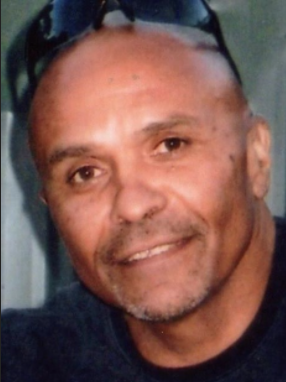
Derek Bromley (2009)
On 9 April 2026 The Advertiser reported that Director of Public Prosecutions (DPP) Martin Hinton KC was stepping down from his position, three months before the end of his term, to head overseas. On 20 March 2023 I (had) sent a submission to Mr Hinton regarding the Crown’s duty of disclosure in the case of Mr Derek Bromley which was due for hearing before the High Court of Australia. It was copied to the Premier and the Attorney-General and tabled in the South Australian Parliament (Legislative Council). It set out the evidence and legal principles supporting the propositions in the above ‘key points’.
… an eminent pathologist from the UK (Dr Richard Shepherd) had recently stated on national television in Australia that Dr Manock had been ‘a charlatan’ and that he had ‘gone completely rogue’ and just ‘made things up’. Despite that, the crown’s written submission to the High Court on Mr Bromley’s appeal had stated that: The referral is to be determined on the basis of the pathological evidence given at trial [by Dr Manock] and the use made of that evidence by the prosecution and the defence at trial.
… given what was now known about Dr Manock’s incompetence and dishonesty, the effect of such a submission would be to mislead the court on a crucial issue. It would obviously be important to ‘correct the record’ during oral submissions. However, during oral submissions the DPP stated:
.. the body [of the deceased] had sustained blunt force trauma to the head and arms, and on anyone’s case, it was ante-mortem at trial. Dr Manock put it within the last 24 hours of life.
However, that was also misleading by not referring to the evidence on the appeal. Dr Lynch, the crown’s expert witness had stated that it was not possible to provide a particular point on a timeline when the injuries could have occurred. He said it was possible they could all have occurred in the postmortem period. The other two expert witnesses on this issue, Professor Thomas and Dr Collins, agreed with that view.
The DPP also went on to state, ‘at trial, on anyone’s case, this man had drowned. It was not in dispute he had drowned.’
However, that was also misleading without referring to the evidence on the appeal which was as follows:
Professor Thomas: I do not believe that one can make the diagnosis of death from drowning. There is no substantive evidence for drowning in this case. A natural cause may explain the death. Dr Collins (who had a special interest in drowning cases): My position is that the cause of death in this case is unascertained and I do not believe it is appropriate to say that there is no doubt the death resulted from drowning. Dr Lynch (the Crown appointed expert): I said in my report that the cause of death should be stated as undetermined or unascertained. I am not in a position to say that he drowned.
perverting the course of justice
It should be noted that Professor Thomas and Dr Lynch had given similar evidence in the appeal of Henry Keogh. The appeal court there accepted their evidence that Dr Manock’s failure to conduct a proper autopsy had led to the conclusion that he had not established the cause of death as being by drowning. It is disturbing to find that the appeal court would not accept the similar findings of the same experts on that issue in Mr Bromley’s case. My submission to the DPP in Mr Bromley’s matter referred to previous Australian legal authorities. They stated that the securing (or maintaining) of a conviction by officials based on evidence known to be false or misleading is ‘an unspeakable outrage’ and could amount to ‘an extremely grave criminal offence’. The UK authorities have stated that it would be to ‘pervert the course of justice’ and if done in conjunction with others would amount to a ‘conspiracy to pervert the course of justice’ which are also very serious criminal offences.
I had suggested to Mr Hinton that the appropriate position for the crown to take would be to concede that the conviction of Mr Bromley had been improperly obtained and that it should be overturned. The most appropriate and effective means by which that could be done would be for the DPP to advise Mr Bromley’s legal advisors that the prosecution would make such a concession if a further appeal were to be brought. Mr Bromley is entitled to pursue a further appeal under the extension to the appeal provisions implemented in May 2013 in South Australia. Unfortunately, Mr Hinton did not accede to the request for a crown concession in Mr Bromley’s matter. However, now that the appointment of a further DPP is in prospect, we should be mindful that a similar approach will be made to the new DPP when appointed.
The new DPP will of course agree with Mr Hinton that the duty of disclosure continues, even after the regular appeal process has been completed, as he explained in his (prior) article on this topic. That will clearly present an invidious problem for a new DPP to deal with.
The lesson to be learned from the history of such cases is that the continuation of the process of delay, denial and obfuscation will make the inevitable accountability more costly and more painful for all involved. Taking ownership of the problem and engaging in meaningful rectification will put an end to the continuing damage to the lives of victims and to the potential damage to the professional reputations of those who would prefer to kick the can down the road. I respectfully request that you consider appointing a special counsel to address this issue before the new DPP is appointed and enable us to work together to determine a constructive solution to this problem.
Yours sincerely,
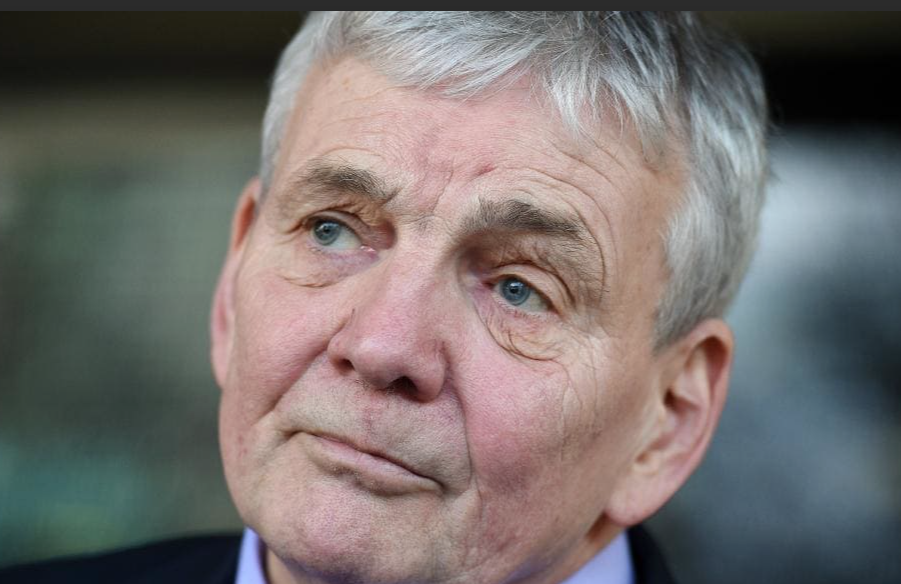
Dr Bob Moles
Robert N Moles
Dr Robert N Moles ACII (UK) LLB (Hons) (Belf) PhD (Edin)
Adjunct Associate Professor (Business, Govt and Law)
Flinders University
Networked Knowledge#
% FRAUD
COMMENT
Andrew L. Urban
The brazen disregard for the rules of disclosure exhibited by representatives of the Crown should have consequences. This case is a damning indictment of several layers of the administration of the legal system in South Australian, starting with those who hired the unqualified Dr Manock, to those who ignored his disqualification at the Bromley trial (plus many other trials) and those who continued to extend the miscarriage of justice against Derek Bromley … to this day! What consequences do they face?
Why wont this country get an independent CCRC.
Because they are so corrupt, and do not care how many innocent peoples lives they ruin. There are no words to describe what it is like to have someone you love wrongfully convicted, the corrupt injustice system must change.
Ladies and Gentlemen.
I give you the law in all its tawdry dishonesty.