Former detective and author GRAEME CROWLEY provides a confronting list of facts that continue to haunt this murder – an unsolved crime whose 12 year old victim continues to be insulted by a process that shames the relevant administrators of the law in Queensland, notably the police.
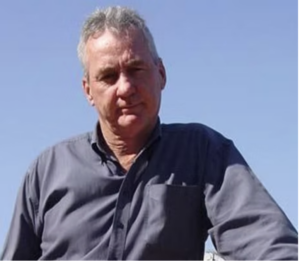
Graeme Crowley
What an interesting 33 years it has been since I first became involved in this case – the murder of Leanne Holland. It irks me that Leanne Holland’s killer has never faced his due punishment. It irritates me that an innocent man spent over 15 years in custody for a crime he did not commit. And is still ignored by our judicial system. And it frustrates me that the Queensland Police remain aloof, refusing to consider that perhaps they were wrong.
- Leanne Sarah Holland, 12 years old, disappeared from her home on or about Monday, 23 September, 1991 at Goodna Qld. It was school holidays.
- Her older sister’s partner, Graham Stafford, was allegedly the last one to see her alive on the Monday at 9am at their shared home.
- She was reported missing late the next day, on Tuesday 24 September 1991.
- A murder investigation was commenced the next morning, Wednesday. Graham Stafford was the first and only suspect.
- He cooperated fully with police; answered all questions over 3 interviews. He provided DNA, blood specimen, fingerprints and clothing. He agreed to searches of house and vehicle etc.
- He denied any involvement in her disappearance and murder.
- The following day, Thursday, 2 motorcycle police found her body in bushland 10 kilometres away at Redbank Plains. Leanne had been sexually assaulted and bashed to death with a hammer.
- On Saturday, 2 days later, Graham Stuart Stafford, 28 years, was arrested for her murder. He had no previous convictions of any kind, including traffic offences; he was in full time employment and had been in a relationship with Leanne’s sister Melissa Holland for about 10 months.
- Less than 3 weeks later, on 16 October 1991, another 12-year-old girl was murdered in Goodna, 1 kilometre from the Holland house. She had been sexually assaulted and drowned. Stafford was in custody at that time. 18-year-old Sean McPhedran was arrested for her murder. He was later convicted and is STILL in custody today, more than 30 years later. He is considered extremely dangerous and it is unlikely he will ever be released.
- Sean McPhedran knew Leanne Holland and her best friend Trisha Lynch. (Police denied this).
- McPhedran was living in the same caravan park as Tricia Lynch and which Leanne used to visit. (Police denied he was living there at the time).
- The possible connection between the murders was raised at Stafford’s trial. The prosecutor disputed there was any connection. He pointed out Leanne had been bashed to death whereas Julie-Ann had been drowned. On that basis, there was no link between the murders.
- The main evidence against Stafford consisted of 2 separate tyre impressions at the body disposal dump site matching identically to the 2 different tyre treads on his vehicle; 3 drops of blood and a maggot found in the boot of Stafford’s vehicle; his hammer, with blood on it, was missing from the home; there was blood in the bathroom in the house consistent with Leanne’s blood; there was drops of blood matching Leanne’s blood group, on the front stairs of the house. (It was alleged Stafford had carried her body down the stairs and placed it in the boot of his car); the house had been recently mopped and blood wiped away; there was a mop and bucket on the rear stairs of the house with blood in it; there was evidence of blood on the door handles, steering wheel, gear shift lever and other parts of the interior of Stafford’s car; Leanne was last seen at 10am on Monday 23 September 1991, heading in the direction of the house she shared with other family members and Graham Stafford; Stafford was on a day off that day and was the last one to see her alive.
- The trial Judge told the jury 17 times during summing up, that the 2 tyre tracks found at the body dump site were an identical match for the 2 different tyres on Stafford’s car.
- Stafford gave evidence at trial. The prosecutor mocked him when Stafford claimed the police had his hammer.
- The trial Judge at Graham Stafford’s trial in 1992 described the Crown case as a strong forensic and circumstantial case (until it wasn’t). Stafford was sentenced to life imprisonment. At that time in Qld, that was a minimum of 15 years imprisonment, but on average it was 22 years.
- Stafford continued to maintain his innocence and denied any involvement.
- His Appeal to the Court of Appeal in 1992 failed and his conviction upheld.
- He applied for leave to apply to the High Court of Australia in 1993. His application was refused.
- In 1992, former Qld Detective Senior Constable Graeme Crowley was trading as a private investigator in Brisbane, Qld.
- He was engaged by the Stafford family to review the evidence in the case. They strongly believed Graham Stafford was innocent. They provided Crowley with a long list of what they believed to be inconsistent evidence.
- He became involved in the case just prior to the application to the High Court being refused on 4 March 1993.
- He worked on the case for 3 months. By the end of that time he was convinced there had been a Miscarriage of Justice. He was deeply suspicious of the actions of some investigating police. He doubted most of the forensic and circumstantial evidence was accurate.
- He found none of the forensic or circumstantial evidence had been challenged at trial.
- Crowley then worked on the case pro-bono for more than 20 years.
- He was disturbed a murder investigation had commenced on day 1, even before her body had been found.
- He found compelling evidence Leanne Holland was seen alive after 10am on the Monday, possibly as late as 8pm that day and even found witnesses who saw her alive on the following day, Tuesday.
- He found it incredible that 2 police on motorcycles, searching an area up to 65,000 square kilometres, (there was no known areas to search) found her body within 8 hours.
- Crowley suspected Sean McPhedran was likely involved in the death of Leanne Holland. Investigations revealed he did not go to work on Monday 23 September. He was acting erratically that day and following days.
- Sean’s mother told Crowley she suspected Sean was involved in the death of Leanne Holland.
- She told Crowley that Sean committed his first murder at age 5 when he drowned his 3-year-old brother in the bath.
- Sean attempted to kill his sister when he was aged 12, by forcing a quantity of drugs down her throat.
- In grade 1, at age 6 he attempted to strangle a female classmate. Crowley was able to speak with the child’s mother who confirmed McPhedran was seconds away from strangling her daughter to death; he would have succeeded except for a vigilant teacher who was alerted by screaming children.
- A policeman with a science degree, 6 years service and no tyre experience, initially told investigators the 2 tyre impressions found at the body disposal dump site were similar to the tyres on Stafford’s vehicle. By the time the trial came around, the 2 impressions were identical with Staffords 2 different tyres.
- Crowley engaged the services of 2 people in the tyre industry with more than 60 years experience between them. They conducted exhaustive tests and concluded one impression was NOT remotely similar to Stafford’s tyres; the other impression was similar but not identical.
- The same policeman had used a field test for identifying blood in the house, hammer and car. When laboratory tests were conducted, no blood was found. The only blood that was confirmed was one drop in the bathroom, several drops on the front stairs, and 3 drops in the boot of Stafford’s car. These were all Leanne’s blood group. The blood drops in the boot were on a tool bag, a Chux cloth and a blanket owned by Melissa Holland (Leanne’s sister). The drop in the bathroom was on the shower curtain.
- Although police had removed the tiles in the bathroom, as well as the S pipes in the bathroom and kitchen, no blood was found.
- Crowley discovered a scientific branch receipt for the hammer (with no blood on it) confirming the police did in fact seize the hammer from Stafford. The trial jury was left with the clear understanding Stafford had hidden the hammer from police.
- Crowley could not find any photographs, video footage, diary entries or field notes confirming the maggot had ever been in the boot of Stafford’s car. There was very strong evidence the maggot had never been in the car boot. The only evidence was police saying they saw it there.
- Crowley engaged scientific evidence on the blood in the boot which concluded it was inconsistent with the blood dropping onto the items.
- In any event, the blanket was owned by Melissa Holland and there was no time frame determined as to when the blood had been deposited on the blanket and other items.
- It was determined Leanne cut her foot on a piece of glass about 6 weeks before her murder, in the house. She walked down the front stairs and showed her father. It was possible her blood had been deposited on the found items, and stairs, by herself.
-

Graeme Crowley
In total, Crowley identified 76 discrepancies with the Crown evidence.
- Qld’s chief forensic scientist reviewed the Crown evidence in 1997. This scientist had given evidence on more than 4,000 occasion ON BEHALF of police and other govt departments. He concluded the murder had never occurred in the bathroom of the family home, as claimed by police, and Leanne’s body had never been in the boot of Stafford’s car.
- Stafford appealed again to the Qld Court of Appeal again in 1997; Qld’s chief forensic scientist gave evidence for the defence; his appeal was unsuccessful.
- In 1997, 2 sisters approached Crowley and told him they believed their father had murdered Leanne Holland. They provided compelling evidence to support their claims.
- They only came forward after their father was sentenced to 8 years imprisonment for incest on them.
- Crowley could not identify him so he was referred to as “Pedo pete”.
- They claimed their father was good friends with Goodna detectives and senior police.
- Crowley followed up the information provided by the sisters and was able to confirm the majority of their claims. Pedo pete had criminal history dating back 40 years.
- ‘Pedo pete’ was known to the Holland family and had lived in the Holland house for a few weeks at one point.
- ‘Pedo pete’ and Leanne’s father had a violent falling out, believed to be over his daughters.
- One extraordinary claim Crowley was able to confirm, centred around police involved in the Holland case, removing ‘Pedo pete’ from prison, every fortnight (for 2 days) for the 8 years he was in prison. The arresting officer was later transferred on promotion to Rockhampton.
- That evidence was passed to the then CMC. They declined to investigate.
- The media interest and noise in the case continued, year in and year out. The Qld government, DPP and Qld Police refused to review the case or intervene.
- There were numerous TV, newspaper and radio stories on the case.
- In 2005, Crowley co-wrote the true crime book “Who Killed Leanne Holland”.
- ABC Australian Story produced 2 x 30 minute episodes on the case in 2006.
- In 2006, Stafford was released on parole, after serving 14 years and 9 months imprisonment. (less than the required minimum).
- In 2009, Stafford again appealed his conviction in the Qld Court of Appeal. On a 2 -1 majority, the conviction was quashed and a retrial ordered. The dissenting Justice wanted to enter a Not Guilty verdict.
- Australian Story produced a further 30 minute episode on the story.
- The DPP declined to retry Stafford, claiming he had already served 15 years imprisonment and there would be no point.
- Stafford, his solicitors and many others pointed out there was now NO evidence which implicated Stafford in the murder. Qld Police refused to reinvestigate the case, claiming they ‘knew’ who had killed Leanne.
- The Qld Govt refused repeated requests by Graham Stafford and others, to hold an inquest into Leanne’s death. An inquest that is compulsory under Qld legislation.
- In 2009, the Crime and Corruption Commission CCC released a reported titled “Dangerous Liaisons”. It followed the conduct of the Det Sgt transferred to Rockhampton from Goodna. It was found he was removing a prisoner serving a life sentence for murder from Rockhampton prison. The Sgt had arranged a police locker for the prisoner at Rockhampton police station. The inmate would be taken to the police station, change into civilian clothes and released into the public arena, and would return 1-2 days later. No mention was made of exactly the same happening to ‘Pedo Pete’ about 6 years earlier, though the CCC was aware of it.
- In 2010, Crown Prosecutor Vishal Laksman retired from his chosen career after 30 years. He wrote his memoir. He told the world that in his 30-year career, he had only ever refused to prosecute one case. He refused to prosecute it because he believed the defendant was innocent. The defendant? Graham Stuart Stafford. Mr Laksman waited 20 years to tell that story!
- In 2010, as a result of continuing media pressure, Qld Police reluctantly agreed to undertake a review of the original investigation. The review took 2 years and the police gave a media conference in 2012, proudly announcing they had indeed got it right the first time around; Stafford was guilty of the murder and had acted alone.
- Police refused to release the review report to Stafford, his solicitors, media or public. Despite stating they would do exactly that when announcing the review initially.
- Police found no evidence to support the claim the maggot in the boot had been fabricated, by police.
- They did confirm police did have Stafford’s hammer.
- As it was not released, it was an untested report. Police claims were unable to be checked and tested.
- Media noise about the case continued.
- In 2014, a very senior member of Qld Police leaked a copy of the review report to Channel 7.
- Channel 7 duly ran a television story based on the contents of the Police Review. They interviewed ‘Pedo pete’ and concluded he was a victim not a paedophile. Despite ‘Pedo pete’ not appealing his incest conviction.
- Channel 7 interviewed a retired superintendent of police for the story. He described himself as a friend of ‘Pedo pete’ and gave him a glowing reference. He told Channel 7 ‘Pedo Pete’ was a frequent visitor to his home and his family.
- Crowley noted that back in 1991, said Superintendent was senior officer for the Goodna area and may well have authorised the ‘murder investigation’ to commence.
- Police still refused to release the report to Stafford. They described themselves as ‘the victim’ of the leak. QPS never undertook inquiries to identify the leaker of the report, though the officer’s identify and senior rank was widely known.
- In 2020, almost 30 years after Leanne’s death, ‘Pedo Pete’ was charged with multiple offences of rape of his 12 year old granddaughter.
- In 2020, Crowley co-hosted a podcast called “Who Killed Leanne Holland”. By that time, he had obtained a redacted copy of the police review (as at 2025 the full file has never been released).
- Crowley was able to debunk many of the claims police made in the untested police review file. For instance, the review concluded there was more than 1 offender, likely 2 involved in the murder of Leanne Holland. Putting another offender in the mix was too difficult to consider. Police briefed the media after the review, Stafford had acted alone.
- The review team NEVER interviewed their own chief scientific officer. The scientist who concluded the murder never occurred in the bathroom, and the body was never in the boot of the car. By not interviewing him, they could conclude the murder happened in the bathroom and the body had been placed in the boot of Stafford’s car.
- The team did not interview anyone else to challenge the conclusion. They simply ignored his evidence.
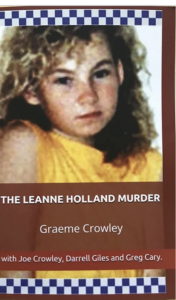
- In 2024, Crowley updated the original book written in 2000. This edition was called “The Leanne Holland Murder”. Chapters in the book were contributed by Barrister Joe Crowley (no relation) who had also worked on the case pro bono for more than 20 years; by former investigative journalist Darrell Giles who had covered the case for around 10 years; and by former radio announcer Greg Cary who had covered the case for over 4 years whilst working at radio station 4BC.
- As at 2025, the Qld Attorney General and the Qld Coroner continue to refuse to hold an inquest into the death of Leanne Holland. Stafford still calls for an Inquest.
- As at 2025, Graham Stafford continues to call for an inquiry into the investigation of the murder of Leanne Holland.
- As at 2025, Stafford continues to remain in full time employment; apart from the arrest for the murder of Leanne Holland, he has lived an unblemished life, with no criminal arrests or convictions prior to that or since then.
- As at 2025, Qld Police have never acknowledged they made a mistake. Instead, they doubled down and shouted they were right, even when they were clearly wrong.
- As at 2025, the DPP has never admitted they should not have prosecuted Graham Stafford. They never admitted they should have explored concerns made by Prosecutor Laksman.
- As at 2025, the Attorney General and the Qld Coroner have never acknowledged that by refusing to hold an inquest, they are complicit in covering up mistakes.Graeme Crowley previously contributed information for our report on the Case of the Missing Prospector.
The Enduring Injustice of the Leanne Holland Murder
Support for Graeme Crowley and a Scathing Indictment of Queensland’s Justice Culture
The pursuit of justice for Leanne Holland and Graham Stafford stands as one of Queensland’s most damning case studies in institutional failure. It is a story not merely of a wrongful conviction, but of a system that has repeatedly chosen reputation over truth, finality over accuracy, and bureaucratic comfort over moral courage.
At the centre of this failure stands the work of Graeme Crowley—former detective, private investigator, and arguably the most persistent and effective critic of the official narrative surrounding Leanne Holland’s murder. Crowley’s decades-long investigation, conducted largely pro bono and often in the face of outright hostility from authorities, has exposed a case so riddled with forensic errors, investigative tunnel vision, and suppressed evidence that the only remaining mystery is how the state continues to pretend it got things right.
That Crowley’s work found a credible, independent platform through Andrew Urban’s Wrongful Convictions Report is no small thing. In a media landscape increasingly allergic to sustained accountability, Urban has provided what Queensland’s institutions would not: a forum where facts are allowed to accumulate, rather than be managed.
A Case That Collapsed—but Was Never Admitted to Have Failed
Graham Stafford was convicted in 1992 of murdering 12-year-old Leanne Holland near Goodna, Queensland. He served nearly 15 years in prison before the Queensland Court of Appeal quashed his conviction in 2009, citing seriously flawed evidence. A retrial was ordered, yet the Director of Public Prosecutions declined to proceed, declaring it “not in the public interest.”
This phrase, not in the public interest, has since become the official fig leaf covering an otherwise naked failure. Stafford was not acquitted. No verdict of innocence was entered. No coronial inquest was held. The state simply walked away, leaving a man legally unconvicted, socially stigmatised, and institutionally abandoned.
Investigative Failure Disguised as Certainty
From the outset, the investigation into Leanne Holland’s death was characterised by premature certainty. Police commenced a murder investigation before a body had even been located, swiftly identifying Stafford as the sole suspect and then proceeding as though that conclusion were self-evident.
Alternative suspects and lines of inquiry were not rigorously tested—they were functionally ignored. Witness sightings suggesting Leanne was alive after the timeline police required were dismissed. Other unsolved crimes in the area, including the murder of another 12-year-old girl just weeks later while Stafford was in custody, were treated as inconvenient coincidences rather than investigative imperatives.
This was not investigation by elimination. It was investigation by exclusion.
Forensic Evidence: From Science to Storytelling
The forensic case against Stafford, once described by the trial judge as “strong,” has since collapsed under even modest scientific scrutiny.
Blood evidence was overstated, misinterpreted, and later discredited. Tyre impressions once described to the jury as “identical” were subsequently shown to be anything but. Allegations concerning a murder weapon, maggot evidence, and the movement of Leanne’s body were presented as fact without adequate documentation or validation.
Most damningly, Queensland’s own Chief Forensic Scientist later concluded that:
The murder did not occur in the family bathroom, and
Leanne’s body had not been transported in Stafford’s vehicle as alleged.
These findings were not embraced as an opportunity for correction. They were inconveniently sidelined.
The Police Review That No One Is Allowed to See
In 2012, Queensland Police completed a two-year internal review of the investigation. The result? Police declared—proudly—that they had been right all along.
Naturally, the report was not released.
Neither Stafford, nor his legal team, nor the public has been permitted to examine the document in full. Freedom of Information applications failed. Requests for transparency were met with silence. The same institution that investigated itself, cleared itself, and briefed the media selectively has insisted it should also be trusted absolutely.
One might admire the confidence, if not for the absurdity.
Media: Loud at the Beginning, Silent at the Reckoning
Much of the media bears its own share of responsibility.
Early coverage leaned heavily into sensationalism, emphasising brutality, proximity, and shock, while uncritically amplifying police narratives. Once the conviction was quashed, coverage dwindled, reframed as “controversy” rather than accountability.
Investigative programs such as Under Investigation and select Channel 7 features eventually exposed forensic weaknesses and investigative contradictions, but even these efforts often stopped short of confronting the broader institutional implications. The question was rarely asked with sufficient force: how did this happen, and why is no one accountable?
The result has been a public left with fragments, not understanding; closure narratives, not justice.
Prosecutors and the Culture of Sunk Costs
The conduct of prosecutors in the Stafford case reveals a deeper cultural problem within the adversarial system.
Former Crown Prosecutor Vishal Laksman later admitted that Stafford was the only defendant he ever refused to prosecute because he believed the man was innocent. This extraordinary admission, made decades later, should have detonated like a bomb within Queensland’s legal establishment.
Instead, it landed with a dull thud.
The system absorbed it, ignored it, and carried on.
Political Cowardice as Policy
Perhaps the most corrosive feature of this saga is the Queensland Government’s refusal to admit error.
Despite a quashed conviction, despite discredited forensic evidence, despite unresolved questions surrounding Leanne Holland’s death, successive Attorneys-General and the Coroner have refused to order a full inquest. This refusal persists despite Queensland legislation that ordinarily mandates one in circumstances like these.
There is no statutory right to compensation for the wrongfully convicted in Queensland. There is no independent criminal case review commission. There is, however, an abundance of official language explaining why now is not the time.
This is not principled restraint. It is institutional cowardice—the kind that ensures wrongful convictions remain someone else’s problem, preferably forever.
Crowley, Urban, and the Uncomfortable Persistence of Facts
Against this backdrop, Graeme Crowley’s work stands as a rebuke to every official body that chose convenience over conscience. His investigations, publications, and public advocacy have not merely questioned the Stafford conviction; they have exposed how fragile the foundations of “certainty” can be when no one is willing to re-examine them.
That this work has been preserved, curated, and amplified through Andrew Urban’s Wrongful Convictions Report matters. Platforms like this exist precisely because official ones have failed. They remind us that justice is not self-executing—and that without pressure, institutions rarely correct themselves.
A System That Refuses to Learn
The Leanne Holland case is not merely unresolved; it is unresolved by design.
It demonstrates how flawed investigations become defended narratives, how reviews become exercises in reputation management, and how political leaders choose silence over accountability. It also shows why wrongful convictions are not anomalies, but predictable outcomes in systems allergic to admitting error.
Until Queensland develops:
genuinely independent review mechanisms,
mandatory transparency when convictions collapse, and
political leadership willing to accept institutional fault,
the Stafford case will remain what it already is:
a warning, ignored at great moral cost.
Graeme Crowley did his job.
Andrew Urban provided the platform.
The rest of the system still hasn’t found the courage to do the same.